
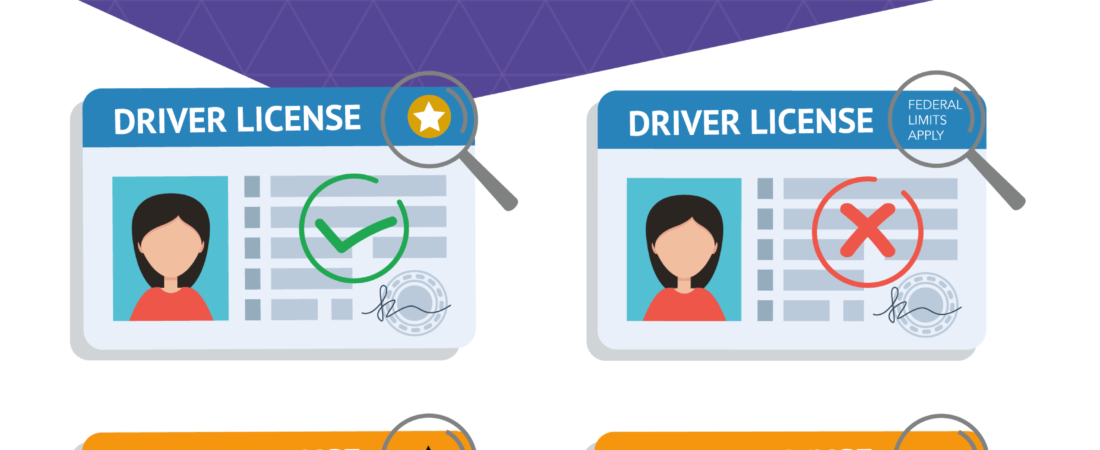
A Real ID is a state-issued driver’s license or identification card that meets security standards established by the United States federal government. It was introduced under the REAL ID Act of 2005, which aimed to improve the reliability and security of identification documents used for certain federal purposes.
For many Americans, this identification looks similar to a regular driver’s license. The main difference is that it meets additional federal requirements for identity verification, lawful status, and document security.
You might have heard about Real ID while booking a flight, renewing your driver’s license, or reading a notice from your state’s motor vehicle department. The topic has become particularly important for travelers because federal enforcement of the requirements for domestic air travel began on May 7, 2025.
However, not everyone needs to obtain one. A valid U.S. passport or another federally accepted form of identification may serve the same purpose in many situations.
Why Is Real ID Important?
The primary purpose of this identification system is to establish more consistent standards for state-issued identification documents. Before the law, states followed different procedures for issuing driver’s licenses and identification cards.
The federal requirements introduced additional safeguards to make identity documents more dependable.
Today, a compliant card can be useful for several purposes:
-
Domestic air travel: Adults generally need a compliant identification document or another TSA-accepted alternative to board flights within the United States.
-
Certain federal facilities: Some federal buildings require compliant identification or another accepted credential for access.
-
Restricted federal facilities: Access to certain locations may require specific identification, depending on the facility’s rules.
One important distinction is that a Real ID is not a passport, and it does not replace every form of identification. It also does not give someone permission to drive unless the card is a valid driver’s license.
Who Needs a Real ID?
Whether you need this credential depends on your travel plans, identification needs, and the documents you already possess.
If you regularly fly between U.S. cities and use a state-issued driver’s license at airport security, obtaining a compliant license may be convenient. However, if you already have a valid U.S. passport, you can generally use it for domestic air travel instead.
People who rarely travel by air may have less reason to upgrade immediately, although they should still consider whether they need access to particular federal facilities.
Children under 18 generally do not need to present identification when traveling with an adult within the United States, according to TSA rules. Airlines may have their own requirements in certain circumstances.
It is also worth remembering that Real ID is primarily a U.S. identification requirement. People living in other countries, including Pakistan, do not need a U.S. Real ID simply to travel domestically within their own country.
What Documents Are Required to Get a Real ID?
The exact documentation requirements vary by state, so checking your local motor vehicle agency’s official website is essential. Most applicants need documents that establish their identity, lawful status, Social Security information, and residential address.
Commonly requested documents include:
-
Proof of identity: A valid U.S. passport or an eligible birth certificate may be accepted.
-
Proof of Social Security number: A Social Security card or another approved document showing the number may qualify.
-
Proof of residency: Utility bills, mortgage statements, or other approved documents can establish your residential address.
-
Proof of lawful status: Depending on the applicant’s circumstances, an eligible immigration document may be required.
Some states require two separate documents showing residency. Others provide different options for applicants who cannot produce a standard document.
Make sure your name is consistent across your paperwork. If your name has changed because of marriage or another legal reason, additional documentation may be necessary.
How to Apply for a Real ID
The application process is relatively straightforward when you prepare the correct paperwork beforehand.
1. Check Your State’s Requirements
Start by visiting your state’s official Department of Motor Vehicles (DMV) or equivalent licensing agency. Review its document checklist and determine whether an appointment is necessary.
2. Gather Your Documents
Collect your identity document, Social Security evidence, and residency documents. Check whether originals are required, as some agencies do not accept photocopies or digital versions.
3. Visit the Licensing Office
Many applicants must visit an office in person to complete identity verification. Depending on your state and circumstances, the agency may take a new photograph, verify your documents, and collect any applicable fee.
4. Pay the Required Fee
The cost depends on your state and whether you are renewing an existing license, replacing a card, or obtaining an identification card for the first time. Some states may charge a different fee for an upgrade.
5. Receive Your Identification
Your state may issue a temporary document while your permanent card is mailed to you. Ask whether the temporary document is acceptable for your intended use, especially if you have an upcoming flight.
Real ID vs. Standard Driver’s License vs. U.S. Passport
These documents can look similar in purpose, but they are not interchangeable in every situation.
| Feature | Real ID license | Standard driver’s license | U.S. passport |
|---|---|---|---|
| Issuing authority | State agency | State agency | U.S. federal government |
| Valid for driving | Yes, if a driver’s license | Yes, if a driver’s license | No |
| Domestic U.S. flights | Generally accepted | Not accepted alone for standard TSA screening | Generally accepted |
| International travel | Not sufficient | Not sufficient | Generally accepted, subject to destination rules |
| Federal identification purposes | Accepted where applicable | May not qualify | Accepted for many purposes |
A standard driver’s license may remain perfectly valid for driving even if it does not meet federal Real ID standards. The difference concerns the specific activities for which the document can be accepted.
Practical Example: Using Real ID for Domestic Air Travel
Imagine that Sarah lives in Texas and plans to fly from Dallas to New York for a business meeting. She has a standard driver’s license that does not meet Real ID requirements.
Before leaving home, Sarah checks the Transportation Security Administration’s identification rules. She discovers that she can use a valid U.S. passport instead of upgrading her license immediately.
Because she already owns a passport, she avoids an unnecessary visit to the licensing office. If she did not have an acceptable alternative, she could check her state’s application process and plan accordingly.
This example highlights a useful point: the best identification choice depends on your circumstances, not simply on whether you have the newest card.
How to Know Whether Your ID Is Real ID Compliant
Many compliant state-issued cards display a star near the top of the card. The design varies by jurisdiction, and some states use a gold star while others use a different star design.
However, you should not rely exclusively on appearance if you are uncertain. Review your state’s identification guidance or contact the issuing agency to confirm your card’s status.
Also, be aware that enhanced driver’s licenses issued by certain states may qualify as acceptable identification under federal rules. These documents can have additional features beyond standard Real ID compliance.
If you are planning to fly, check the TSA’s official list of acceptable identification before traveling. Requirements and accepted alternatives can change, and confirming them ahead of time can prevent unnecessary delays.
The Practical Value of Choosing the Right Identification
The most useful approach is to match your identification to your actual needs. A frequent domestic traveler might prefer a compliant driver’s license because it serves both driving and airport identification purposes. Someone who already carries a passport may not need to change their existing license solely for air travel.
Think beyond the initial application, too. Check expiration dates, keep your documents secure, and allow sufficient time for renewal or replacement before an important trip.
I find that checking the official document checklist before starting an application is one of the simplest ways to avoid wasted trips and unnecessary paperwork.
Ultimately, understanding the difference between state identification and federally accepted credentials helps you make a more informed decision.
Also Read: Crypto30x.com TNT: Risks, Facts & Safety Guide 2026
Conclusion
Real ID establishes federal standards for certain state-issued driver’s licenses and identification cards in the United States. Since May 7, 2025, compliant identification or another TSA-accepted alternative has generally been required for adults boarding domestic commercial flights.
Getting a compliant card usually involves providing identity, Social Security, residency, and applicable lawful-status documentation. However, requirements and fees differ by state.
Before applying, consider whether you already have a valid passport or another accepted credential. By checking official requirements and preparing the right documents, you can choose the identification option that best suits your travel plans and everyday needs.
FAQs
1. Is Real ID mandatory for everyone?
No. It is not mandatory for every American in every situation. It is generally required, or an accepted alternative must be presented, for adults boarding domestic commercial flights and for certain other federal purposes.
2. Can I fly without a Real ID?
Yes, provided you have another TSA-accepted form of identification, such as a valid U.S. passport. If you arrive without acceptable identification, additional identity verification may be possible, but it is not guaranteed and can cause delays.
3. How much does a Real ID cost?
There is no single nationwide fee. The price depends on your state and whether you are renewing, replacing, or upgrading a license. Check your local licensing agency for current fees.
4. Does a Real ID replace a passport?
No. It generally works for qualifying domestic identification purposes, but it does not replace a passport for international air travel.
5. How can I tell if my driver’s license is Real ID compliant?
Look for the identifying symbol used by your state, commonly a star. If you are unsure, contact your state’s licensing agency to verify the document’s status.
6. Can non-U.S. citizens get a Real ID?
Eligible non-U.S. citizens may qualify, depending on their immigration status and the documents they can provide. Applicants must meet federal requirements and their state’s application rules.
7. Where can I apply for a Real ID?
Apply through your state’s Department of Motor Vehicles or equivalent driver’s licensing agency. Use the official state website to find the required documents, appointment procedures, and current fees.