
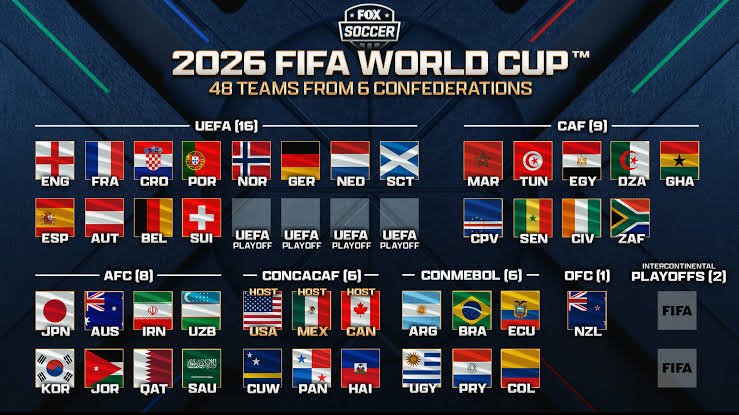
The FIFA World Cup 2026 marked a historic moment in international football, bringing together more nations, more matches, and a wider global audience than any previous edition. Hosted jointly by the United States, Canada, and Mexico, the tournament introduced a new competition format featuring 48 national teams instead of the traditional 32. It also created opportunities for countries that had never previously reached football’s biggest stage.
From exciting group-stage encounters to dramatic knockout matches, the competition delivered a memorable experience for football supporters around the world. Spain eventually lifted the trophy after defeating Argentina in the final, adding another remarkable chapter to World Cup history.
Whether you want to understand the tournament structure, explore its host cities, review the final results, or learn what made this edition different, this guide covers the essential details.
What Made the FIFA World Cup 2026 Different?
The 2026 competition introduced several important changes that separated it from previous tournaments. The most significant development was the expansion from 32 to 48 participating nations.
This decision created more opportunities for national teams from different football regions to compete at the highest level. It also increased the total number of matches from 64 in Qatar 2022 to 104 in the expanded competition.
Another major change was the introduction of an additional knockout round. Instead of moving directly from the group stage to the round of 16, qualifying teams first competed in a new round of 32.
The tournament ran from June 11 to July 19, 2026, across three countries and 16 host cities. These changes made the competition larger and introduced a different path toward winning the championship.
Fixtures, groups, teams & more+2
Three Countries Hosted One Global Football Celebration
For the first time in men’s FIFA World Cup history, three countries shared hosting responsibilities.
United States: The United States hosted the largest portion of the matches, with venues spread across major cities, including Los Angeles, Miami, Dallas, Seattle, Atlanta, Houston, Boston, and Philadelphia.
Canada: Toronto and Vancouver represented Canada, bringing international football to two of the country’s major sporting destinations.
Mexico: Guadalajara, Mexico City, and Monterrey hosted matches, allowing Mexico to become the first country to host men’s World Cup matches across three different editions.
This shared hosting arrangement created a unique geographical experience. Supporters could enjoy different cultures, stadium environments, local traditions, and football communities throughout the competition.
It also demonstrated how international sporting events can connect countries through a shared passion.
Understanding the New 48-Team Tournament Format
The expanded structure was one of the most important talking points surrounding the competition. FIFA divided the 48 participating nations into 12 groups, with four teams in each group.
Every team played three group-stage matches. The qualification system then determined which nations progressed to the knockout rounds.
The top two teams from each group automatically qualified. They were joined by the eight best third-placed teams, creating a 32-team knockout competition.
The tournament followed this structure:
-
Group Stage: 48 teams competed in 12 groups.
-
Round of 32: 32 qualifying nations entered the knockout stage.
-
Round of 16: 16 teams continued their championship campaigns.
-
Quarter-Finals: Eight teams competed for semifinal places.
-
Semi-Finals: Four nations fought for a place in the final.
-
Third-Place Match: The two semifinal losers competed for third position.
-
Final: The remaining two teams competed for the World Cup trophy.
This format meant that eventual champions needed to win eight matches rather than seven.
The expanded structure also made the group stage particularly interesting because finishing third did not automatically mean elimination. Teams had another opportunity to qualify through their overall group-stage performance.
FIFA World Cup 2026™+1
FIFA World Cup 2026 vs Qatar 2022
The differences between the two editions show how significantly the competition developed.
| Tournament Feature | Qatar 2022 | FIFA World Cup 2026 |
|---|---|---|
| Participating teams | 32 | 48 |
| Host countries | Qatar | USA, Canada, Mexico |
| Groups | 8 | 12 |
| Teams per group | 4 | 4 |
| Total matches | 64 | 104 |
| Knockout starting round | Round of 16 | Round of 32 |
| Tournament duration | 29 days | 39 days |
| Finalists’ matches | 7 | 8 |
The biggest difference was not simply the number of participating nations. The additional knockout stage changed the journey toward the final, while the three-country hosting arrangement created a much larger geographical footprint.
For supporters, this meant more international matchups, additional opportunities to watch emerging football nations, and a longer tournament experience.
Which Teams Participated in the Competition?
The 48-team expansion allowed a wider selection of national teams to participate. Established football powers competed alongside nations hoping to establish themselves on the international stage.
Traditional contenders included Argentina, Brazil, France, Germany, Spain, England, Portugal, and the Netherlands.
The tournament also featured teams such as Japan, Morocco, Senegal, Australia, Uzbekistan, Jordan, and New Zealand.
Several countries made their men’s World Cup debuts, including Cape Verde, Curaçao, Jordan, and Uzbekistan. Their participation represented an important achievement for their respective football communities.
For supporters, these new appearances added another layer of interest. International football is not only about established champions; it is also about seeing smaller football nations challenge stronger opponents and create their own memorable moments.
The Historic FIFA World Cup 2026 Final
Spain 1–0 Argentina (after extra time)
The final took place on July 19, 2026, at New York New Jersey Stadium. Spain faced defending champions Argentina in a match that brought the expanded tournament to its conclusion.
Both teams remained level at 0–0 after 90 minutes, taking the contest into extra time. Spain eventually found the breakthrough when Ferran Torres scored in the 106th minute.
That goal proved decisive, giving Spain a 1–0 victory and securing its second men’s World Cup championship, following the country’s previous triumph in 2010.
The result also meant Argentina could not retain the trophy after winning the 2022 edition.
Spain’s victory became one of the defining moments of the tournament, while the final provided a dramatic conclusion to a competition that had already made history through its expanded format.
Inside FIFA+1
Record-Breaking Attendance and Tournament Highlights
The 2026 edition also attracted enormous attention from football supporters. According to FIFA, approximately 6.81 million fans attended matches across the 16 host cities, setting a new attendance record for the men’s competition.
The tournament featured 308 goals across 104 matches, demonstrating the attacking quality and competitive nature of the expanded event.
These numbers highlight how the competition became more than a sporting championship. It was a major international celebration involving supporters, national football associations, broadcasters, and host communities.
One useful way to understand the scale of this event is to look beyond the final score: the expanded format gave more countries a chance to participate while offering supporters additional matches and different football cultures to discover.
Inside FIFA+1
How Football Fans Followed the Tournament
Following a major international competition requires more than checking match scores. Supporters often want fixtures, group standings, qualification scenarios, team performances, and knockout-stage results in one place.
For example, imagine a supporter following Argentina during the group stage. After every match, they would need to check the team’s points, goal difference, and position in the group. If Argentina finished among the eight best third-placed teams, its qualification chances would depend on the performances of other nations as well.
This is why reliable football coverage matters. Official FIFA updates, match reports, statistics, and verified results help supporters understand what happened rather than relying on incomplete information circulating on social media.
When I explain a complicated tournament structure to readers, I find that following one team’s journey from the group stage to the final makes the entire competition much easier to understand.
The Lasting Impact of the 2026 Competition
The tournament’s influence extends beyond the final result. Its expanded format created additional opportunities for national teams, while the three-host arrangement brought international football to a wider geographical audience.
For Canada, Mexico, and the United States, hosting the competition offered an opportunity to showcase their sporting infrastructure, hospitality, and football communities.
The event also provided valuable international exposure for emerging football nations. Teams that previously struggled to reach the final tournament could now compete against established international sides and gain experience at the highest level.
Another important development was the increased number of matches. More fixtures created additional opportunities for broadcasters, commercial partners, and supporters to engage with international football.
However, an expanded tournament also brings challenges, including player workload, travel distances, scheduling, and maintaining competitive balance. These considerations will remain important when FIFA evaluates the format for future editions.
Also Read: LinkedIn Login: Sign In and Troubleshoot Access Issues!
Conclusion
The FIFA World Cup 2026 will be remembered as a landmark edition in international football. Its 48-team format, 104 matches, and three-country hosting arrangement introduced significant changes to the world’s biggest football competition.
Spain’s extra-time victory over Argentina secured a historic second championship and provided a memorable ending to the tournament. Meanwhile, the participation of more nations helped make this edition especially important for the global development of football.
For supporters, the competition offered unforgettable matches, new international rivalries, and opportunities to discover emerging football talent. Its impact will continue to influence discussions about the future structure and worldwide reach of international football.
FAQs
1. When did the FIFA World Cup 2026 take place?
The tournament took place from June 11 to July 19, 2026, across the United States, Canada, and Mexico.
2. How many teams participated in the 2026 World Cup?
A total of 48 national teams participated, making it the first men’s World Cup to feature an expanded 48-team format.
3. Which countries hosted the FIFA World Cup 2026?
The United States, Canada, and Mexico jointly hosted the competition across 16 cities.
4. Who won the FIFA World Cup 2026?
Spain won the championship after defeating Argentina 1–0 following extra time in the final on July 19, 2026.
5. How many matches were played in the 2026 World Cup?
The tournament featured 104 matches, including group-stage fixtures, knockout games, the third-place match, and the final.
6. How many groups were there in the 2026 World Cup?
There were 12 groups, each containing four national teams. The top two teams from each group and the eight best third-placed teams advanced to the Round of 32.