
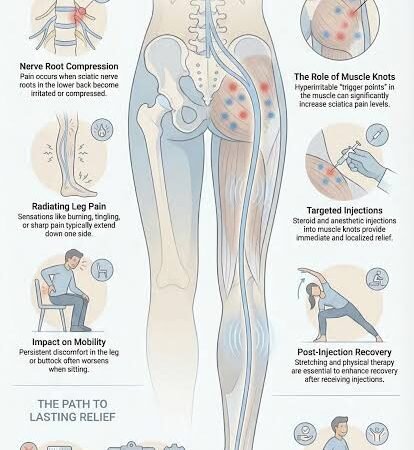
Sciatica can turn ordinary activities into uncomfortable challenges. Sitting at a desk, walking around the house, driving, or even getting out of bed may become difficult when pain travels from the lower back into the leg. For some people, the discomfort feels like a dull ache, while others experience sharp, burning, or electric-like sensations.
The good news is that many cases improve with conservative treatment, movement, and appropriate self-care. Understanding what causes sciatic nerve irritation, recognizing its symptoms, and knowing when to seek medical attention can make recovery easier and help prevent unnecessary discomfort.
What Is Sciatica?
Sciatica refers to pain caused by irritation or compression of the sciatic nerve or its nerve roots. The sciatic nerve is the largest nerve in the human body. It begins in the lower spine, passes through the buttocks, and travels down each leg toward the feet.
Although the term is commonly used to describe lower-back and leg pain, it is not a medical condition by itself. Instead, it describes a group of symptoms associated with an underlying problem affecting the nerve.
Typically, symptoms affect one side of the body. Pain may extend from the lower back through the hip and buttock, continuing down the back or side of the thigh and sometimes reaching the foot.
Common Causes of Sciatic Nerve Pain
Several conditions can irritate or compress the nerve. Identifying the underlying cause helps healthcare professionals recommend suitable treatment.
1. Herniated Disc
A herniated or slipped disc is one of the most common causes. Spinal discs act as cushions between the vertebrae. When the soft inner material pushes through the outer layer, it may press against nearby nerve roots.
This pressure can trigger pain, tingling, numbness, or weakness in the affected leg.
2. Spinal Stenosis
Spinal stenosis occurs when the spaces within the spinal canal become narrower. This can place pressure on nerves, particularly in older adults experiencing age-related spinal changes.
Symptoms sometimes become worse while standing or walking and improve when sitting or leaning forward.
3. Degenerative Disc Disease
As people age, spinal discs naturally lose some flexibility and moisture. These changes may contribute to inflammation, reduced cushioning, and nerve irritation.
4. Piriformis Syndrome
The piriformis muscle is located deep in the buttock. In some individuals, irritation or tightness around this muscle can affect the nearby sciatic nerve, producing symptoms that resemble nerve compression in the spine.
5. Spondylolisthesis
This condition occurs when one vertebra slips forward over another. Depending on its severity, the movement may narrow the spaces around spinal nerves and contribute to radiating leg pain.
Common Symptoms to Recognize
Symptoms vary depending on the location and severity of nerve irritation. Some people experience mild discomfort, while others struggle with everyday movement.
Common signs include:
-
Radiating pain: Discomfort travels from the lower back or buttock into one leg.
-
Burning sensations: The affected area may feel hot or irritated.
-
Tingling: Some people experience pins-and-needles sensations in the leg or foot.
-
Numbness: Reduced sensation may develop along the nerve pathway.
-
Muscle weakness: Moving the foot or leg may become difficult.
-
Pain during movement: Sitting, coughing, sneezing, or bending may increase discomfort.
An important distinction is that ordinary lower-back pain does not necessarily indicate nerve involvement. Pain extending down one leg, especially alongside tingling or numbness, makes sciatic nerve irritation more likely.
How Is Sciatica Diagnosed?
A healthcare professional usually begins with a medical history and physical examination. They may ask where the pain starts, how far it travels, when it becomes worse, and whether weakness or changes in sensation are present.
A physical examination may include checking muscle strength, reflexes, walking ability, and leg movement. A straight-leg raise test may also help identify nerve irritation.
Imaging is not necessary for every patient. However, an MRI may be recommended when symptoms are severe, persistent, associated with neurological problems, or when surgery is being considered. X-rays may help identify certain structural changes, although they do not show nerve compression directly.
Treatment Options for Sciatica
Treatment depends on the underlying cause, symptom severity, and overall health. Many people recover without surgery.
1. Gentle Movement and Physical Activity
Although resting may feel comfortable initially, prolonged bed rest can increase stiffness and slow recovery. Gentle walking and regular changes in position may help maintain mobility.
A physiotherapist can recommend exercises that improve flexibility, strengthen supporting muscles, and reduce pressure on sensitive structures.
2. Physical Therapy
Physical therapy often focuses on strengthening the abdominal and back muscles, improving posture, and restoring normal movement.
Exercises should be selected according to the individual’s condition. A movement that helps one person may worsen another person’s symptoms.
3. Medication
Depending on the situation, a healthcare professional may recommend pain relievers or anti-inflammatory medicines. Some medications may be unsuitable for people with kidney problems, stomach ulcers, cardiovascular conditions, or other health concerns.
Never assume that an over-the-counter medicine is automatically safe for everyone.
4. Hot and Cold Therapy
Cold packs may help reduce discomfort during an acute flare-up, while heat can relax tight muscles and improve comfort.
| Treatment | Potential benefit | When it may help |
|---|---|---|
| Cold pack | Temporary pain relief | During an acute flare-up |
| Heat therapy | Relaxes tight muscles | When stiffness is present |
| Physical therapy | Improves strength and mobility | During recovery |
| Gentle walking | Maintains movement | When tolerated |
| Medication | Reduces selected symptoms | When recommended by a professional |
Use a protective cloth between your skin and hot or cold packs, and avoid applying extreme temperatures directly to the skin.
5. Injections and Surgery
For severe or persistent symptoms, doctors may consider an epidural steroid injection to reduce inflammation around irritated nerve roots. Its benefits vary, and relief may be temporary.
Surgery is generally reserved for selected cases, particularly when significant nerve compression causes progressive weakness or symptoms remain disabling despite appropriate nonsurgical treatment.
Lifestyle Changes That May Support Recovery
Small adjustments can make everyday activities more comfortable and help reduce repeated strain.
-
Improve sitting posture: Keep your feet supported and avoid remaining in one position for extended periods.
-
Take movement breaks: Stand up, stretch gently, or walk briefly throughout the day.
-
Lift carefully: Bend your knees and keep objects close to your body when lifting.
-
Maintain a healthy weight: Excess body weight may increase mechanical stress on the spine.
-
Choose comfortable sleeping positions: A pillow between the knees when sleeping on your side may improve comfort.
-
Stay physically active: Regular, appropriate exercise supports spinal mobility and overall muscle strength.
Consider someone who works remotely and spends eight hours sitting at a computer. After several weeks, they begin experiencing pain from the right buttock down to the calf. Instead of ignoring the symptoms, they arrange a medical assessment, adjust their workstation, and begin a supervised exercise program. These combined steps may help address contributing factors while supporting recovery.
When Should You See a Doctor?
Persistent or worsening leg pain deserves medical attention, particularly when it interferes with walking, sleeping, or normal activities.
Get immediate medical help if you experience:
-
New difficulty controlling your bladder or bowel movements.
-
Numbness around the genitals, buttocks, or inner thighs (saddle anesthesia).
-
Severe or worsening weakness in both legs.
-
Sudden major neurological changes.
These symptoms may indicate cauda equina syndrome, a rare but serious condition requiring urgent assessment.
You should also arrange a medical evaluation if pain follows a significant injury or occurs alongside fever, unexplained weight loss, or a history of cancer.
Understanding Recovery: What to Expect
Recovery time depends on the cause and severity of nerve irritation. Some people feel better within a few weeks, while others experience symptoms for several months.
Acute episodes often improve within four to six weeks, although persistent symptoms may require additional investigation and treatment.
One useful approach is to maintain a simple symptom diary. Record when discomfort starts, which movements make it worse, how far it travels, and what activities provide relief. This information can help a healthcare professional identify patterns and tailor treatment rather than relying on guesswork.
From a patient’s perspective, one of the most frustrating parts of recovery can be discovering that pain changes throughout the day, even when the underlying condition has not noticeably changed.
Also Read: Pregnancy Symptoms: Early Signs and What to Expect Today
Conclusion
Sciatica can interfere with daily life, making sitting, walking, sleeping, and working uncomfortable. However, understanding its causes and recognizing the warning signs can help people take appropriate action.
Gentle movement, physical therapy, suitable medication, and lifestyle adjustments often provide meaningful relief. More advanced treatments may be necessary when nerve compression is severe or symptoms do not improve.
The most important step is identifying the underlying cause instead of treating every episode of leg pain as the same condition. With an appropriate treatment plan and timely medical guidance, many people can regain mobility and return to their usual activities.
FAQs
1. What is the fastest way to relieve sciatic nerve pain?
Gentle movement, avoiding prolonged sitting, and using heat or cold packs may provide temporary relief. A healthcare professional can recommend appropriate exercises and medication based on the underlying cause.
2. Can sciatica go away on its own?
Yes. Many cases improve naturally within several weeks, particularly when nerve irritation is temporary. Persistent or worsening symptoms should be evaluated by a healthcare professional.
3. Is walking good for sciatica?
Walking can help maintain mobility and prevent stiffness. Start with short, comfortable walks and gradually increase activity if symptoms allow. Stop if pain or weakness significantly worsens.
4. What should you avoid when experiencing sciatic pain?
Avoid prolonged bed rest, heavy lifting, sudden twisting, and activities that consistently worsen symptoms. There is no universal list of prohibited movements, so individual limitations matter.
5. Can sciatica cause permanent nerve damage?
Most cases do not cause permanent damage. However, severe or prolonged nerve compression can sometimes result in lasting weakness or sensory changes. New or progressive weakness and bladder or bowel problems require urgent medical assessment.