
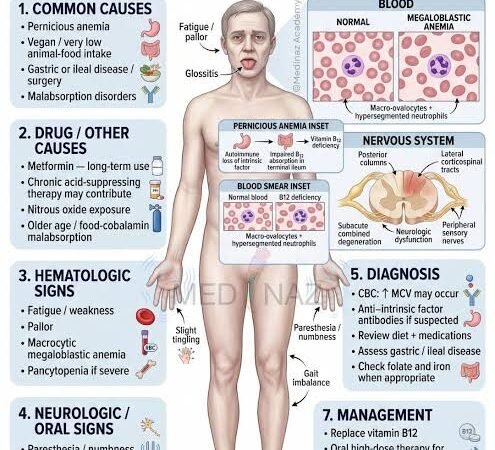
Vitamin B12 is an essential nutrient that plays a major role in keeping the body healthy. It supports red blood cell production, protects nerve cells, helps produce DNA, and contributes to normal brain function. When the body does not receive or absorb enough of this vitamin, a condition known as B12 deficiency can develop.
The problem is that its symptoms often appear gradually. Some people experience constant tiredness, while others notice tingling in their hands and feet, memory difficulties, or changes in mood. Because these signs can resemble other health conditions, the underlying cause is not always immediately obvious.
Understanding the warning signs, risk factors, diagnosis, and available treatments can help people recognize the problem before complications develop.
What Is Vitamin B12 Deficiency?
Vitamin B12 deficiency occurs when the body has insufficient vitamin B12 to perform its normal functions. This nutrient, also called cobalamin, is water-soluble and naturally present in foods such as meat, fish, eggs, dairy products, and certain fortified foods.
Unlike some vitamins, B12 requires a complex absorption process. Stomach acid helps release it from food, and a protein called intrinsic factor allows the small intestine to absorb it properly.
If someone does not consume enough B12 or has difficulty absorbing it, their vitamin stores can gradually become depleted.
The condition may lead to megaloblastic anemia, in which the body produces unusually large and immature red blood cells. However, nerve-related complications can also occur, sometimes even without anemia.
Common Symptoms of B12 Deficiency
Symptoms can develop slowly over several months or even years. Their severity depends on how low vitamin levels become and how long the deficiency remains untreated.
Some common warning signs include:
-
Persistent fatigue: Feeling unusually exhausted despite getting enough sleep.
-
Weakness: Experiencing reduced physical energy or difficulty completing everyday activities.
-
Tingling sensations: Numbness or pins and needles in the hands and feet.
-
Pale or slightly yellowish skin: Changes associated with certain forms of anemia.
-
Memory problems: Difficulty concentrating, remembering information, or thinking clearly.
-
Balance difficulties: Feeling unsteady while walking or coordinating movements.
-
A sore tongue: Inflammation, redness, or a smooth appearance of the tongue.
-
Mood changes: Irritability, low mood, or other psychological symptoms.
Not everyone experiences the same combination of symptoms. Some people initially notice only tiredness, making it easy to overlook the possibility of a nutritional deficiency.
What Causes Low Vitamin B12 Levels?
Several factors can interfere with vitamin B12 intake or absorption. Identifying the underlying cause is important because treatment may involve more than simply changing dietary habits.
1. Insufficient Dietary Intake
Vitamin B12 is primarily found in animal-based foods. People following strict vegan diets may have a higher risk if they do not regularly consume fortified foods or appropriate supplements.
Vegetarians who eat eggs and dairy generally have more dietary options, although their intake may still be insufficient.
2. Pernicious Anemia
Pernicious anemia is an autoimmune condition in which the immune system attacks stomach cells responsible for producing intrinsic factor. Without enough of this protein, the body struggles to absorb vitamin B12.
People with this condition often require lifelong treatment.
3. Digestive System Disorders
Certain gastrointestinal conditions can interfere with nutrient absorption. These include Crohn’s disease, celiac disease, and disorders affecting the stomach or small intestine.
People who have undergone certain stomach or intestinal surgeries may also experience absorption difficulties.
4. Certain Medications
Long-term use of some medications can contribute to lower B12 levels.
Examples include metformin, commonly prescribed for type 2 diabetes, and proton pump inhibitors, which reduce stomach acid.
However, these medications do not affect everyone in the same way. People should discuss potential risks with their healthcare professionals rather than stopping prescribed treatment independently.
Who Is More Likely to Develop This Deficiency?
Although anyone can develop low vitamin B12 levels, certain groups face a greater risk.
| Group | Why the risk may increase |
|---|---|
| Older adults | Reduced stomach acid and absorption problems |
| Vegans | Limited natural dietary sources |
| People with pernicious anemia | Reduced intrinsic factor production |
| Individuals with digestive disorders | Difficulty absorbing nutrients |
| Metformin users | Possible interference with B12 status |
| People with gastrointestinal surgery | Changes in normal absorption |
Recognizing these risk factors can help individuals and healthcare professionals decide when testing may be appropriate.
How Is B12 Deficiency Diagnosed?
A healthcare professional usually begins by reviewing symptoms, dietary habits, medical history, and medications.
A blood test is commonly used to measure vitamin B12 levels. Depending on the results and clinical situation, additional tests may be recommended.
These can include:
-
Complete blood count (CBC): Checks red blood cells and other blood components.
-
Serum vitamin B12: Measures the amount of circulating vitamin B12.
-
Methylmalonic acid (MMA): Helps identify functional B12 deficiency when initial results are unclear.
-
Homocysteine: May provide additional information about vitamin metabolism.
-
Intrinsic factor antibody testing: Helps investigate suspected pernicious anemia.
A normal blood count does not always rule out a deficiency. Similarly, B12 test results should be interpreted alongside symptoms and other clinical findings.
Treatment Options for Vitamin B12 Deficiency
Treatment depends on the severity of the deficiency and what is preventing the body from getting enough vitamin B12.
The main options include:
Vitamin B12 Supplements
Oral supplements are commonly recommended when low intake is responsible for the problem. Healthcare professionals may prescribe higher doses depending on individual needs.
Supplements are available in several forms, including cyanocobalamin and methylcobalamin. Both provide vitamin B12, although the appropriate product and dosage depend on the person’s circumstances.
Vitamin B12 Injections
Injections may be recommended when someone has significant absorption problems, pernicious anemia, or neurological symptoms.
They deliver vitamin B12 directly into the body, bypassing the normal digestive absorption process. Some people need ongoing injections, particularly when the underlying cause cannot be reversed.
Treating the Underlying Cause
Replacing the missing vitamin is only part of the solution. If a digestive disorder, medication, or autoimmune condition contributes to the deficiency, that issue also needs attention.
I would not rely on supplements alone without understanding why vitamin levels have dropped in the first place.
Treatment should be guided by a qualified healthcare professional, particularly when numbness, balance problems, or memory changes are present.
NHS+1
Best Foods to Increase Vitamin B12 Naturally
Food can help maintain healthy B12 levels, especially when inadequate dietary intake is the main issue.
Some useful dietary sources include:
-
Fish: Salmon, tuna, sardines, and trout.
-
Meat: Beef, chicken, and other animal products.
-
Eggs: Particularly useful for people who include eggs in their regular diet.
-
Dairy products: Milk, cheese, and yogurt.
-
Fortified cereals: Some breakfast cereals contain added vitamin B12.
-
Fortified plant-based milk: Certain soy, almond, and oat milk products provide additional B12.
The recommended daily intake for most adults is 2.4 micrograms. Pregnant adults generally need 2.6 micrograms, while breastfeeding adults need 2.8 micrograms.
People following vegan diets should pay particular attention to fortified foods and reliable supplementation because ordinary unfortified plant foods are not dependable sources of naturally occurring B12.
Vitamin B12+1
A Practical Example: Recognizing the Warning Signs
Consider someone who works long hours at a computer and frequently feels exhausted. Initially, they might blame poor sleep or a demanding schedule. A few weeks later, they begin experiencing tingling in their feet and difficulty concentrating.
Instead of assuming these symptoms are simply caused by stress, arranging a medical assessment and appropriate blood tests would be a sensible next step.
This example highlights an important point: persistent fatigue combined with neurological symptoms deserves attention, especially when dietary or medical risk factors are present.
How to Prevent Vitamin B12 Deficiency
Prevention begins with understanding your nutritional needs and maintaining a reliable source of this essential vitamin.
Consider these practical habits:
-
Include B12-rich foods in your regular meals.
-
Choose fortified products if you follow a plant-based diet.
-
Discuss supplementation with a healthcare professional when dietary intake is limited.
-
Review long-term medication use with your doctor if you have relevant risk factors.
-
Investigate persistent digestive problems rather than ignoring them.
-
Follow recommended monitoring and treatment if you have an absorption disorder.
Remember that eating more animal products will not necessarily solve the problem when the body cannot absorb the vitamin properly.
When Should You See a Doctor?
Seek medical advice if you experience unexplained tiredness, persistent weakness, numbness, tingling, memory difficulties, or balance problems.
Do not delay an assessment if neurological symptoms are developing. Prolonged deficiency can cause lasting nerve damage, even when anemia is absent.
Sudden severe weakness, new difficulty walking, or rapidly worsening neurological symptoms require prompt medical evaluation rather than self-treatment.
Another important precaution concerns folic acid. High-dose folic acid can improve some blood abnormalities while an underlying B12 deficiency remains untreated, potentially allowing neurological damage to continue. A healthcare professional should assess both nutrients when appropriate.
NHS+1
Conclusion
B12 deficiency is a nutritional problem that can affect much more than energy levels. It may interfere with red blood cell production, nerve function, memory, and overall well-being. Although symptoms sometimes develop gradually, recognizing them early can make a significant difference.
A balanced diet, appropriate supplementation, and timely medical testing are important parts of maintaining healthy vitamin levels. However, the most effective approach is to identify the underlying cause rather than simply treating the symptoms.
If you suspect low B12 levels, consult a healthcare professional and consider appropriate blood testing. Early diagnosis and treatment can help prevent serious and potentially permanent complications.
FAQs
1. What are the first signs of B12 deficiency?
Early symptoms may include tiredness, weakness, reduced concentration, and tingling sensations in the hands or feet. Some people also experience a sore tongue or changes in mood.
2. Can low vitamin B12 cause extreme fatigue?
Yes. Insufficient B12 can interfere with normal red blood cell production, potentially causing anemia and reducing oxygen delivery throughout the body. This can contribute to persistent exhaustion.
3. Which foods contain the highest amounts of vitamin B12?
Clams, beef liver, fish, meat, eggs, and dairy products are among the richest natural sources. Fortified cereals and plant-based milk can also provide B12.
4. How long does it take to recover from B12 deficiency?
Recovery varies depending on the severity, underlying cause, and treatment method. Some people notice improvements within weeks, while neurological symptoms may take several months or longer. Certain complications can become permanent if treatment is delayed.
5. Can B12 deficiency cause hair loss?
Some people with nutritional deficiencies report hair changes, but the direct relationship between B12 deficiency and hair loss is not well established. Other causes, including iron deficiency and thyroid disorders, should also be considered.
6. Is vitamin B12 deficiency common in vegetarians?
Vegetarians and especially vegans may have an increased risk because natural B12 sources are concentrated in animal-based foods. Fortified products and appropriate supplements can help prevent inadequate intake.
7. Can you have B12 deficiency without anemia?
Yes. Neurological symptoms, including numbness, tingling, and balance difficulties, can develop even when blood counts appear normal.