
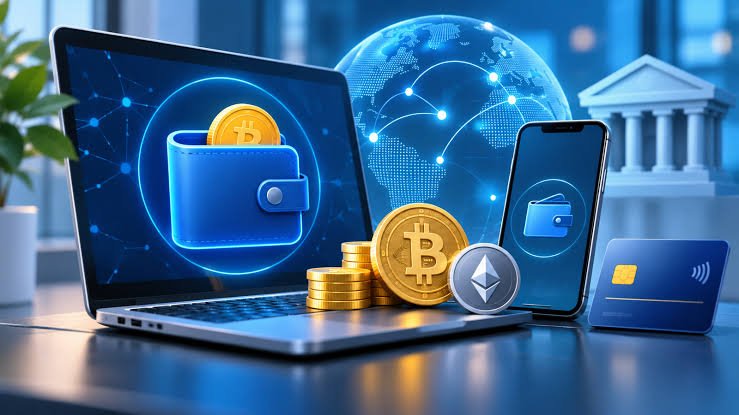
Money has changed significantly over the past decade. People no longer need to visit a bank every time they want to transfer funds, check their balance, or pay for something. Digital wallets, online banking, mobile payment applications, and cryptocurrencies have made financial transactions faster and more accessible. As these technologies continue to develop, understanding how digital finance works has become increasingly important.
Coyyn.com digital money is a topic that connects modern financial technology with everyday money management. It introduces readers to the changing financial landscape, including digital currencies, electronic payments, online banking, and financial opportunities in the growing digital economy. For beginners, entrepreneurs, freelancers, and technology enthusiasts, understanding these subjects can make financial decisions easier.
What Is Coyyn.com Digital Money?
Coyyn.com is an informational website that covers several areas of modern finance and business. Its content includes digital money, cryptocurrency, digital banking, investments, business growth, and the gig economy.
Its digital money coverage focuses on explaining how financial value is stored, transferred, and managed through electronic systems. Instead of relying exclusively on physical cash, individuals and businesses increasingly use digital platforms to handle everyday transactions.
Digital money can take several forms, including:
- Electronic bank balances: Money held in traditional bank accounts and accessed online.
- Digital wallets: Applications that allow users to store payment information and make electronic transactions.
- Cryptocurrencies: Digital assets that use cryptographic technology, often operating on decentralized blockchain networks.
- Stablecoins: Digital tokens designed to maintain a relatively stable value, usually by referencing another asset.
- Central bank digital currencies: Digital forms of central bank money that may be issued by monetary authorities.
Coyyn.com helps readers explore these concepts and understand how they relate to the wider financial system.
How Digital Money Is Changing Everyday Financial Activities
Digital payments have become a normal part of daily life. Whether someone purchases groceries, receives freelance income, or pays an online subscription, electronic financial systems often handle the transaction.
One major advantage is convenience. Users can access their accounts through smartphones or computers without visiting a physical branch. Transactions can also be completed outside traditional banking hours, depending on the service and payment network.
Another important development is financial accessibility. People living far from major commercial centers can use digital banking services to receive payments, pay bills, and manage their finances.
However, convenience does not automatically mean every transaction is free, instant, or completely secure. Processing charges, transfer limits, network delays, and account restrictions can vary between providers.
Important Features of the Digital Money Ecosystem
Understanding the technologies behind electronic finance makes it easier to recognize their practical value.
1. Digital Banking
Digital banking allows customers to manage financial accounts through websites and mobile applications. Common features include balance checking, fund transfers, transaction histories, and bill payments.
For small businesses, online banking can simplify financial administration. Owners can monitor incoming payments, review expenses, and organize transactions without depending entirely on paper records.
2. Digital Wallets and Mobile Payments
Digital wallets provide an electronic way to store payment credentials and complete transactions. Some services also support peer-to-peer transfers and contactless payments.
Their usefulness depends on merchant acceptance, regional availability, account requirements, and security policies.
3. Cryptocurrency and Blockchain
Cryptocurrency introduces another approach to digital value. Many cryptocurrencies use blockchain technology, which maintains a shared record of transactions across a distributed network.
Bitcoin and Ethereum are well-known examples, although they serve different purposes and have different technical structures.
Blockchain can support transparent transaction records and programmable applications. Nevertheless, cryptocurrency prices can fluctuate substantially, and users must understand wallet security, transaction fees, and regulatory requirements before participating.
4. Stablecoins and Digital Currency Development
Stablecoins aim to reduce price fluctuations by linking their value to an external reference, such as a traditional currency. Their stability depends on the issuer, reserves, redemption arrangements, and market conditions.
Central bank digital currencies are different because they represent digital central bank money rather than privately issued crypto tokens. These developments demonstrate that the future of digital finance may include several different forms of electronic value.
Benefits of Understanding Coyyn.com Digital Money
Learning about digital finance offers practical advantages beyond simply understanding new technology.
Better financial awareness: Readers can learn how electronic payments, digital assets, and online banking systems work.
Improved money management: Digital financial tools can help individuals monitor spending, organize budgets, and review transaction histories.
Business efficiency: Entrepreneurs can explore payment technologies and financial tools that may simplify business operations.
Knowledge of emerging opportunities: Understanding cryptocurrency, stablecoins, and digital capital helps readers evaluate developments in the financial technology sector.
Greater awareness of financial risks: Learning about transaction security, fraud, and regulatory requirements can help people make more responsible decisions.
The real benefit comes from knowing which technology solves a particular problem instead of adopting every new financial product simply because it is popular.
Digital Money Compared With Traditional Financial Methods
Different payment methods serve different purposes. Comparing them helps users understand where digital financial tools are most useful.
| Feature | Cash | Traditional Banking | Digital Wallets | Cryptocurrency |
|---|---|---|---|---|
| Payment method | Physical | Electronic or physical | Electronic | Blockchain-based |
| Accessibility | In-person | Account required | Compatible device and account | Compatible wallet |
| Transaction speed | Immediate exchange | Depends on payment network | Depends on provider | Depends on blockchain |
| Price stability | Currency-dependent | Currency-dependent | Usually linked to regular currency | Often volatile |
| Main concern | Loss or theft | Account security | Device and account security | Wallet and market risks |
No single option is ideal for every situation. Cash remains useful for offline transactions, while traditional banking provides established financial services. Digital wallets simplify many payments, and cryptocurrency offers different technological possibilities with additional risks.
Practical Uses in Everyday Life and Business
Consider a freelancer who works with clients in different countries. Instead of managing every payment manually, the freelancer may use online banking and supported payment services to receive income, track transactions, and organize monthly expenses.
For example, a graphic designer receiving payments from international customers might compare available payment providers based on conversion rates, withdrawal charges, settlement times, and local availability. Choosing carefully can prevent unnecessary costs.
From my perspective, the most valuable part of understanding digital finance is learning to compare the actual costs and protections of different services before trusting them with money.
Small businesses can benefit in similar ways. Digital payment records can make bookkeeping easier, while online banking tools help owners monitor cash flow and identify recurring expenses.
Security and Privacy: What Users Should Know
Financial convenience must always be balanced with security. Digital transactions involve personal information, account credentials, and sometimes sensitive financial records.
A few practical precautions can reduce common risks:
- Enable two-factor authentication wherever available.
- Use strong, unique passwords for financial accounts.
- Avoid accessing banking services through suspicious links.
- Never share verification codes or recovery phrases.
- Check website addresses before entering personal information.
- Review transaction histories regularly.
- Use trusted networks when accessing sensitive accounts.
Privacy also deserves attention. Financial applications may collect identity details, transaction records, device information, and other personal data. Before opening an account, review the provider’s privacy policy and understand how information is stored and shared.
Cryptocurrency users should be particularly careful with private keys and recovery phrases. Losing access to these credentials can result in permanent loss of assets.
Is Coyyn.com a Financial Service or an Educational Resource?
This distinction is particularly important for anyone researching the website.
Coyyn.com primarily operates as an informational and editorial resource. It publishes material about digital finance, cryptocurrency, banking, investments, business, and the gig economy.
It should not be confused with a licensed bank, cryptocurrency exchange, investment broker, or digital wallet provider. Its informational content can help readers understand financial concepts, but it does not replace professional financial advice.
Before using any financial service discussed in an article, independently verify the provider’s identity, regulatory status, fees, and terms. This is especially important when dealing with investments or cryptocurrency.
The Future of Digital Money
Digital finance will continue evolving as payment networks, artificial intelligence, blockchain applications, and financial regulations develop.
Businesses may increasingly automate payment processing and financial reporting. Consumers may gain access to more convenient payment options, while governments and financial institutions continue exploring new digital currency models.
However, technological progress will also introduce challenges involving privacy, cybersecurity, financial inclusion, and consumer protection.
The future will not necessarily eliminate cash or traditional banking. Instead, different financial methods may operate alongside one another, giving people more choices depending on their needs.
Also Read: GitHub Login: Sign In, Account Access & Help Guide Tips
Conclusion
Coyyn.com digital money provides an interesting starting point for understanding how modern financial systems are changing. From online banking and digital wallets to cryptocurrencies and stablecoins, electronic financial technologies are influencing how individuals and businesses manage money.
The important thing is not simply to follow financial trends but to understand the benefits, limitations, and risks of each option. Coyyn.com can serve as an educational resource for exploring these developments, while users should independently verify financial services and seek qualified advice before making significant decisions.
As digital finance continues to expand, financial knowledge, responsible technology use, and strong security habits will remain essential.
FAQs
1. What is Coyyn.com digital money?
Coyyn.com digital money refers to the website’s informational coverage of electronic payments, digital currencies, online banking, cryptocurrencies, and modern financial management.
2. Is Coyyn.com a cryptocurrency platform?
No. Coyyn.com is an informational website covering cryptocurrency and digital finance. It should not be mistaken for a cryptocurrency exchange or trading platform.
3. Does Coyyn.com provide digital wallets?
Coyyn.com does not directly provide digital wallet or payment services. Readers should use independently verified financial providers for those services.
4. Is digital money different from cryptocurrency?
Yes. Digital money is a broad category that includes electronic bank balances, mobile wallet funds, stablecoins, and cryptocurrencies. Cryptocurrency is only one type of digital asset.
5. What are the main benefits of digital money?
Common benefits include convenient payments, easier financial tracking, electronic transfers, improved accessibility, and reduced dependence on physical cash.
6. Is digital money safe to use?
It can be safe when handled through reputable providers with appropriate security measures. However, phishing, account theft, data breaches, and payment fraud remain possible.
7. Can small businesses benefit from digital finance?
Yes. Digital financial tools can help businesses accept payments, monitor transactions, manage expenses, and organize financial records more efficiently.
8. Why should beginners learn about digital currencies?
Understanding digital currencies helps beginners recognize how modern payment systems work, identify potential risks, and make more informed financial decisions.