
Paying for college can feel overwhelming, especially when tuition, textbooks, accommodation, and everyday expenses keep adding up. For many students in the United States, the FAFSA is an important first step toward making higher education more affordable. It helps determine eligibility for federal student aid and can also open the door to state grants, college scholarships, and other financial assistance.
Whether you’re preparing for your first year of college or returning to school, understanding how the application works can help you avoid common mistakes and make better financial decisions.
What Is FAFSA?
FAFSA stands for the Free Application for Federal Student Aid. It is an official application used by the U.S. Department of Education to evaluate students for financial assistance with college, career school, and certain graduate programs.
The application is free to complete through the official Federal Student Aid website. You don’t need to pay a company to submit it for you.
Based on the information provided, students may qualify for several types of assistance, including federal grants, work-study opportunities, and student loans. Many states and colleges also use FAFSA information when awarding their own financial aid.
One important detail: submitting the form does not guarantee that you’ll receive money. Your eligibility depends on factors such as your financial circumstances, enrollment status, and the requirements of individual aid programs.
Why Is FAFSA Important for College Students?
College costs extend far beyond tuition. Students may also need to cover transportation, housing, meals, course materials, and technology. Financial aid can reduce the amount families must pay themselves.
Here are some of the main benefits of applying:
- Grants: Eligible students may receive grants, such as the Federal Pell Grant, that generally don’t need to be repaid.
- Federal student loans: Qualified applicants may access federal loans, which must be repaid under their applicable terms.
- Work-study programs: Eligible students may find part-time employment through participating schools.
- State financial assistance: Some states use application information to determine eligibility for grants and other education funding.
- Institutional aid: Colleges may use the information to evaluate students for school-funded assistance.
Even if you think your household earns too much to qualify, applying may still be worthwhile. Some aid programs have different eligibility rules, and you cannot always predict your options based on income alone.
Who Can Apply for FAFSA?
The application is available to students pursuing eligible postsecondary education who meet the applicable federal student aid requirements.
Depending on the circumstances, eligibility may involve citizenship or eligible noncitizen status, enrollment in an eligible program, satisfactory academic progress, and other requirements. Some applicants may also need to meet rules concerning Selective Service registration or the resolution of certain federal student loan or grant issues.
There is no universal income cutoff that automatically makes every student ineligible for all forms of aid. Financial need matters for many programs, but other assistance has different criteria.
Students who are considered dependent for financial aid purposes generally need to provide information from a parent or qualifying contributor. This is not necessarily the same as being claimed as a dependent on a tax return. Federal rules determine dependency status.
Independent students generally provide their own financial information and, when applicable, their spouse’s information.
How to Complete the FAFSA Application
Completing the form becomes much easier when you prepare before opening it. Follow these steps to get started.
1. Create a StudentAid.gov Account
Visit the official Federal Student Aid website and create your account. Keep your login information secure because you’ll use it to access your application and review updates.
2. Choose the Correct Academic Year
Different application forms cover different academic years. For example, the 2026–27 form applies to eligible study periods between July 1, 2026, and June 30, 2027. The 2027–28 form covers July 1, 2027, through June 30, 2028.
Choose the form that matches the period for which you need assistance. If you’re attending a summer session, check with your school’s financial aid office to confirm which application is appropriate.
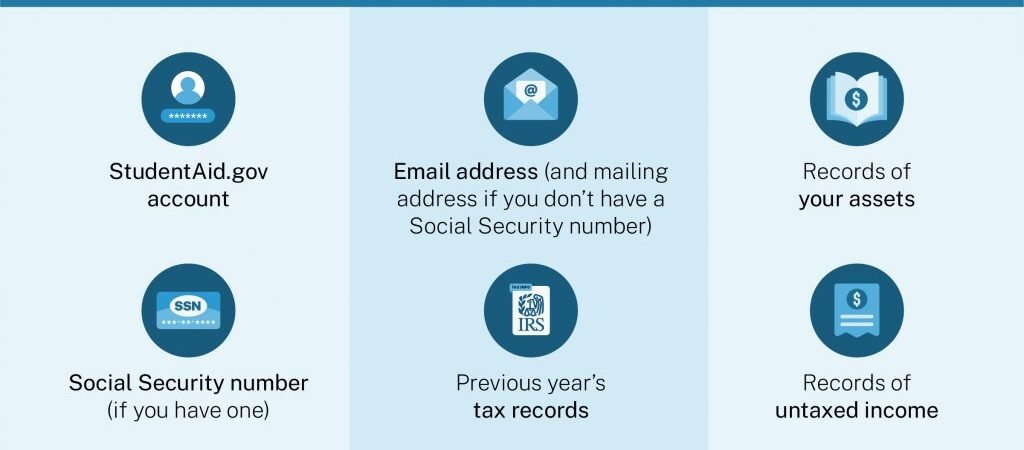
3. Gather Your Information
Depending on your situation, you may need personal identification details, tax and financial information, records of certain assets, and information from a parent or spouse.
The application may retrieve federal tax information through an authorized data exchange, but you should still have relevant records available to answer questions accurately.
4. Invite Required Contributors
If your application requires information from a parent or spouse, follow the instructions to invite the appropriate contributor. Each person must complete their required section and provide any necessary consent and approval.
A contributor’s involvement does not automatically mean that person is financially responsible for paying your college tuition.
5. Review, Sign, and Submit
Check your answers carefully before submitting the form. Make sure all required sections are complete and that the appropriate people have provided their signatures and consent.
After submission, monitor your account for processing updates or requests for corrections.
What Types of Financial Aid Can You Receive?
Understanding the difference between aid options can help you compare financial aid offers more confidently.
| Type of aid | Does it need repayment? | How it helps |
|---|---|---|
| Federal grants | Generally no | Helps eligible students cover education expenses |
| Scholarships | Usually no | Provides funding based on academic, personal, financial, or other criteria |
| Work-study | No loan repayment, but requires work | Offers eligible students opportunities to earn money through employment |
| Federal student loans | Yes | Provides funds that must be repaid under the loan’s terms |
| Private student loans | Yes | May help cover remaining costs, subject to lender approval and terms |
FAFSA is an application for aid consideration, not a scholarship program itself. You may need separate applications for private scholarships, certain college awards, or other funding opportunities.
When comparing offers, look beyond the headline amount. A package with more grant assistance and less borrowing may be more affordable over time than one that relies heavily on loans.
FAFSA Deadlines: What Should You Know?
Missing a deadline can limit your financial aid options, even if you qualify based on your circumstances.
For the 2026–27 academic year, the federal FAFSA deadline is June 30, 2027. However, your state or college may have a much earlier deadline, particularly for limited grant funding or priority consideration.
The 2027–28 application is also available, so students planning to attend during that academic year should select the appropriate form.
I always recommend treating the earliest applicable deadline as the one that matters most, because waiting for the federal deadline can mean missing opportunities offered by your state or school.
Check the current dates through the official FAFSA website and your college’s financial aid office. Some programs also require additional forms or documentation.
How FAFSA Supports College Financial Planning
Imagine Maya, a high school senior planning to attend a public university. Her family expects to contribute toward tuition, but they are concerned about accommodation, books, and transportation.
Maya completes her financial aid application early, lists the colleges she’s considering, and checks each institution’s priority deadline. After processing, she reviews her FAFSA Submission Summary and follows up with her university about its financial aid offer.
Her final package includes a grant, an opportunity to apply for work-study, and a federal student loan option.
Instead of borrowing the full cost of attendance immediately, Maya compares her total expenses, considers the grant money first, and estimates how much she can realistically contribute through savings and part-time work. She then evaluates whether borrowing the remaining amount is manageable.
Her situation illustrates an important point: completing the application early gives students more time to understand their options, ask questions, and make informed choices. The actual aid available will vary from student to student.
Common FAFSA Mistakes to Avoid
A few simple precautions can help prevent unnecessary delays.
- Waiting too long: State and institutional deadlines may arrive before the federal deadline.
- Choosing the wrong academic year: Make sure the application matches your intended period of enrollment.
- Entering inconsistent information: Check names and financial details carefully.
- Forgetting contributor sections: If a parent or spouse must participate, their required steps need to be completed.
- Assuming submission means approval: Review your application status and follow up on any outstanding requirements.
- Ignoring the financial aid offer: Understand which amounts are grants, work-study estimates, and loans before making a decision.
- Paying for a free application: Use the official government website rather than an unnecessary paid filing service.
If your family’s financial circumstances have changed significantly since the tax year used on the application, contact the college’s financial aid office. The school may be able to review your circumstances through an authorized professional judgment process, although additional aid is not guaranteed.
Also Read: The PSLF Guide: Eligibility, Payments & Loan Forgiveness
Conclusion
FAFSA can be one of the most useful starting points for students seeking help with college expenses. It connects eligible applicants with potential federal assistance while allowing states and educational institutions to evaluate them for additional funding.
The smartest approach is to choose the correct academic year, prepare your information, submit the application early, and review every financial aid offer carefully. Remember that grants and scholarships can reduce borrowing needs, while loans create repayment obligations.
Start with the official application, verify your deadlines, and ask your school’s financial aid office for guidance whenever something is unclear. A little preparation today can give you more time and flexibility when planning your education.
FAQs
1. What does FAFSA stand for?
FAFSA stands for Free Application for Federal Student Aid. It is the official application used to determine eligibility for federal student aid and is also used by many states and colleges to assess applicants for additional assistance.
2. Is FAFSA free to apply for?
Yes. Submitting the official application is completely free. Use StudentAid.gov to begin or manage your application.
3. Can I apply for FAFSA if my parents earn a high income?
Yes, you can apply. Higher household income may affect eligibility for need-based assistance, but there is no single income limit that automatically disqualifies every applicant from all aid programs. Other eligibility factors also matter.
4. When should I submit my FAFSA?
Submit it as early as practical after the correct application becomes available. Check federal, state, and college deadlines because the earliest deadline may determine whether you qualify for particular funding opportunities.
5. Does FAFSA have to be completed every year?
Generally, yes. Students must submit a new application for each academic year in which they want to be considered for federal student aid.
6. How long does FAFSA take to process?
Processing time varies. Many online applications are processed immediately, while some take one to three days. Additional corrections or verification requirements can extend the overall financial aid process.
7. What happens after I submit my application?
After processing, you can review your FAFSA Submission Summary, which provides a summary of your responses and estimates of potential federal aid eligibility. Your selected schools receive the relevant information and use it to assess your financial aid options.
8. Can international students apply for FAFSA?
Most international students who do not meet federal citizenship or eligible noncitizen requirements cannot receive federal student aid through FAFSA. However, they may qualify for institutional scholarships, private funding, or other assistance. Check each college’s international student financial aid policies for available options.
9. What should I do if I make a mistake on my application?
Sign in to your StudentAid.gov account and review the available correction options. If the issue involves dependency status, unusual financial circumstances, or another complex matter, contact your college’s financial aid office for guidance.
10. Where can I check my FAFSA status?
Sign in to your account at StudentAid.gov to review your application status, access your FAFSA Submission Summary, and identify any outstanding steps.