
Paying for college can feel overwhelming, especially when tuition, textbooks, accommodation, transportation, and everyday expenses start adding up. For many students and families, the biggest challenge isn’t choosing the right school—it’s figuring out how to afford it without taking on excessive debt.
That’s where financial aid comes in. It can help eligible students cover educational expenses through grants, scholarships, work-study opportunities, and student loans. Understanding these options before enrolling can make a significant difference in how much you pay out of pocket and what your finances look like after graduation.
Whether you’re a high school student preparing for college, an adult returning to education, or a parent helping your child plan ahead, knowing how education assistance works can help you make better decisions.
What Is Financial Aid?
Financial aid is money or financial support that helps students pay for education-related expenses. It may come from the federal government, state governments, colleges, universities, private organizations, or other eligible sources.
Depending on the program, assistance may cover tuition and fees, books, supplies, housing, meals, transportation, and other approved education costs.
In the United States, federal student aid is administered by the U.S. Department of Education. Many students begin the process by completing the Free Application for Federal Student Aid (FAFSA). Colleges and government agencies use the information submitted to determine eligibility for various programs.
However, receiving assistance isn’t automatic. Eligibility can depend on factors such as financial circumstances, enrollment status, academic requirements, citizenship or eligible noncitizen status, and the rules of the particular program.
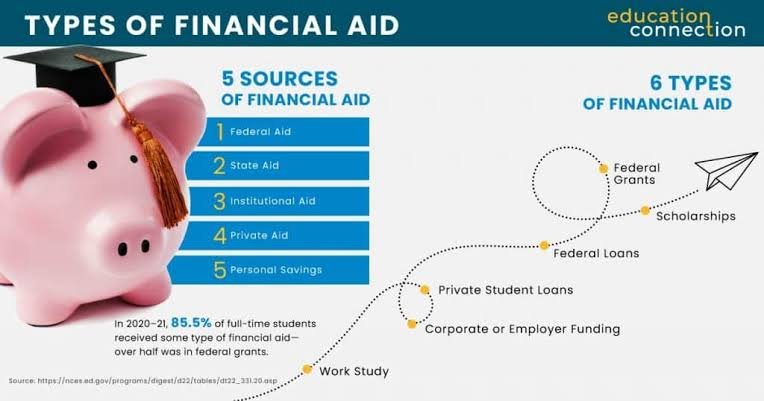
Types of Financial Aid Available to Students
Not all education funding works the same way. Some assistance reduces college costs without requiring repayment, while other options involve work or borrowing.
1. Grants
Grants are generally funds that students don’t have to repay, provided they meet the program’s conditions. Federal Pell Grants, for example, may help eligible undergraduate students with exceptional financial need.
Some states and colleges also offer grants. Certain awards require students to maintain specific enrollment or academic conditions, so it’s important to review the terms carefully.
2. Scholarships
Scholarships provide funding based on criteria established by the organization offering them. Awards may recognize academic performance, athletic ability, community involvement, artistic talent, career interests, or financial need.
Unlike student loans, scholarships generally don’t require repayment when their conditions are met.
Students can look for scholarships through their colleges, local community organizations, employers, professional associations, and reputable scholarship databases. Even smaller awards can help cover books, transportation, or other expenses.
3. Work-Study Programs
Federal Work-Study provides eligible students with opportunities to earn money through approved part-time employment. Jobs may be available on campus or, in some cases, with eligible off-campus employers.
Work-study earnings are wages for work performed, not a lump sum automatically applied to the tuition bill. Students should consider their class schedules and living costs before relying on these earnings to pay expenses.
4. Student Loans
Student loans allow students to borrow money for education and repay it later, usually with interest. Federal student loans often provide borrower protections and repayment options that differ from private loans.
Private education loans are offered by banks, credit unions, and other lenders. Their interest rates, eligibility standards, repayment terms, and protections vary.
Borrowing should be considered carefully. Compare the total amount you’ll owe, interest costs, repayment conditions, and expected earnings after graduation before accepting a loan.
How to Apply for Financial Assistance
Applying early and keeping your documents organized can make the process easier. For students in the United States, the FAFSA is the main starting point for federal student aid and is also used by many states and colleges to assess eligibility.
USAGov+1
Follow these steps to get started.
-
Create your StudentAid.gov account. You will need an account to access and submit the online FAFSA form.
-
Gather the required information. Depending on your circumstances, you may need income and asset information and details from a parent or spouse who must contribute to the application.
-
Complete the FAFSA. Answer each question accurately and include the schools you want to consider.
-
Check deadlines. Colleges and states may set deadlines earlier than the federal deadline. Submit your application as early as practical.
-
Review your FAFSA Submission Summary. Check the information for errors and follow any instructions for corrections or additional documentation.
-
Compare financial aid offers. Once colleges provide their offers, evaluate the amount and type of assistance available at each institution.
You generally need to submit a new FAFSA for each academic year in which you want federal student aid. The form is free, so be cautious of websites that charge a fee simply to submit it.
Federal Student Aid+1
Who Qualifies for Financial Aid?
Eligibility depends on the type of assistance you’re seeking. For federal student aid, general requirements include demonstrating financial need for need-based programs, meeting citizenship or eligible noncitizen requirements, and attending an eligible institution in an eligible program. Additional requirements may apply.
Federal Student Aid+1
Your family’s income matters, but it isn’t the only factor. Family size, household circumstances, enrollment status, and other information can affect eligibility. There is no single income cutoff that determines eligibility for every federal student aid program.
Students should apply even if they are unsure whether they qualify. Colleges may use application information to determine eligibility for institutional grants and other assistance, and some opportunities have separate application requirements.
Financial Aid Comparison: Which Option Is Best?
Different forms of education funding serve different purposes. This table highlights the main differences.
| Aid type | Must you repay it? | What to know |
|---|---|---|
| Grants | Usually no | Eligibility and program conditions apply |
| Scholarships | Usually no | Awards depend on specific criteria |
| Work-study | No loan repayment | You earn wages through approved employment |
| Federal student loans | Yes | Review interest and repayment terms |
| Private student loans | Yes | Compare rates, fees, and borrower protections |
The most useful way to compare offers is to focus on net price, not the headline award amount. Subtract grants and scholarships from the school’s total cost of attendance to estimate the amount that remains. Work-study earnings generally require you to work, and loans create debt, so neither should be treated as equivalent to a grant.
For example, a college offering a larger package may still cost more if much of the package consists of loans. A smaller offer containing more grants could leave you with less debt after graduation.
Real-World Example: Comparing College Costs and Financial Aid Offers
Imagine a student comparing two colleges. College A costs $30,000 per year and offers $12,000 in grants and scholarships. College B costs $25,000 and offers $9,000 in grants and scholarships.
-
College A: $30,000 − $12,000 = $18,000 remaining.
-
College B: $25,000 − $9,000 = $16,000 remaining.
Based on these simplified figures, College B costs $2,000 less per year before considering other resources or borrowing. The student should also compare housing, transportation, course availability, graduation prospects, and the likely need for loans.
This is why reviewing the complete cost of attendance matters more than choosing a college based on its advertised scholarship total.
Common Financial Aid Mistakes to Avoid
A few preventable errors can make paying for college harder.
-
Missing priority deadlines: Some state and institutional funds are limited, so late applications may reduce your options.
-
Assuming all aid is free: Loans must be repaid, and certain grants can require repayment if program conditions are not met.
-
Ignoring renewal requirements: Some awards depend on academic progress, enrollment, or annual applications.
-
Borrowing the maximum offered: Approval to borrow doesn’t mean you need the entire amount.
-
Overlooking smaller scholarships: Local awards and departmental scholarships can help cover expenses that larger programs don’t meet.
-
Paying for FAFSA submission: The official application is free. Use the government website and ask your school’s aid office for help if needed.
USAGov+2
A useful habit is to maintain a simple funding worksheet that lists each award, whether repayment is required, renewal conditions, payment dates, and the expenses still uncovered. This makes it easier to spot a funding gap before classes begin rather than after the first bill arrives.
Tips for Getting the Most Out of Your Aid Package
Start by contacting the financial aid office at each college you’re considering. Ask whether institutional scholarships are available, whether your award can be reconsidered if your family’s financial circumstances have changed, and what happens if your enrollment status changes.
Keep copies of applications, award letters, and communications. If you experience a significant financial change, such as a parent’s job loss or unexpected household expenses, ask the college whether a financial aid appeal or professional review is available.
From a student’s perspective, one of the most valuable habits is checking the full cost of attendance before committing to a school, rather than assuming that an impressive scholarship automatically makes it affordable.
Also Read: EdFinancial: Login, Payments, Repayment Plans & Help
Conclusion
Financial aid can make college, university, and career training more accessible, but understanding the terms is just as important as receiving an award. Grants and scholarships can reduce education costs, work-study can provide income, and loans can fill funding gaps when used carefully.
Start with the FAFSA if you’re seeking U.S. federal student aid, check school-specific deadlines, explore additional scholarships, and compare offers based on the actual amount you will need to pay. With careful planning, you can choose an educational path that supports your goals without placing unnecessary pressure on your future finances.
FAQs
1. What is financial aid used for?
It helps eligible students pay for college or career school expenses, including tuition, fees, books, supplies, housing, and other approved costs.
2. Is financial aid free money?
Not always. Grants and scholarships generally do not require repayment when their conditions are met. Work-study provides earned wages, while student loans must be repaid with interest.
3. How do I apply for financial aid?
In the United States, begin by completing the free FAFSA form at the official Federal Student Aid website. You may also need to complete separate applications for institutional or private scholarships.
4. Can I qualify for aid if my family earns a good income?
Possibly. Eligibility varies by program, and some assistance is not strictly need-based. Apply and review the requirements instead of assuming your income automatically disqualifies you.
5. Do I have to apply for financial aid every year?
Generally, yes, if you want to be considered for federal student aid each academic year. Check your college’s renewal requirements and submit the appropriate FAFSA on time.
6. What happens if my financial aid doesn’t cover all my expenses?
Explore additional scholarships, institutional assistance, payment plans, part-time employment, and other available resources. If considering loans, compare the terms carefully and borrow only what you reasonably need.