
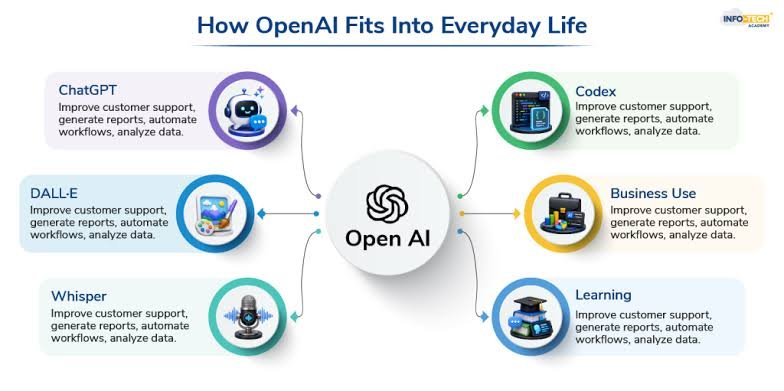
Artificial intelligence is changing how people work, communicate, learn, and solve everyday problems. Tasks that once required hours of research or technical knowledge can now be completed with the help of intelligent digital tools. At the centre of this transformation is OpenAI, a technology company developing advanced AI systems designed to make artificial intelligence more useful and accessible.
From conversational assistants and image generation to advanced coding tools and business automation, its technology is influencing industries worldwide. Whether someone wants to improve productivity, explore new ideas, develop software, or understand complicated information, AI-powered solutions are becoming increasingly relevant.
But what exactly is this company, how does its technology work, and why are so many individuals and businesses interested in its products? Understanding these questions provides a clearer picture of the opportunities and challenges shaping the future of artificial intelligence.
What Is OpenAI?
OpenAI is an artificial intelligence research and deployment company established in 2015. Its mission is to ensure that artificial general intelligence (AGI) benefits all of humanity.
The organization develops AI models, applications, and developer tools that help people interact with technology through natural language, images, audio, and code.
Its work extends beyond building chatbots. The company conducts research into advanced machine learning, reasoning capabilities, multimodal systems, and responsible AI deployment.
One of its most recognized products is ChatGPT, which allows users to ask questions, generate content, explore ideas, and complete various digital tasks through conversation.
The organization also provides tools for developers and businesses interested in integrating AI capabilities into their own applications.
OpenAI+1
How Does OpenAI Technology Work?
Artificial intelligence systems developed by the company rely on machine learning models trained to recognize patterns and process information.
Rather than simply matching questions with predetermined answers, language models analyze context and generate responses based on patterns learned during training.
For example, when someone asks an AI assistant to explain a complicated topic, the system processes the request and generates an explanation based on its learned capabilities.
Different technologies support different tasks:
-
Natural language processing: Helps AI understand and generate human language.
-
Machine learning: Enables systems to identify patterns and improve their capabilities through training.
-
Reasoning models: Help tackle complex problems involving multiple steps.
-
Computer vision: Allows AI systems to interpret and analyze visual information.
-
Generative AI: Creates original text, images, and other digital content.
These technologies work together to make modern AI applications more flexible and useful across different industries.
Popular Products and Services
The company offers several products designed for individuals, developers, and organizations. Each serves a different purpose, making its technology relevant to a wide range of users.
1. ChatGPT
ChatGPT is one of its best-known products. It helps users communicate with AI through everyday language.
People use it for writing, research, learning, brainstorming, coding, summarizing documents, and understanding difficult subjects.
Its capabilities extend beyond text conversations. Depending on the available features and subscription, users can also work with images, voice, files, and other interactive tools.
2. GPT Models
GPT models form an important part of the company’s AI technology. These systems are designed to understand instructions, process context, and generate useful responses.
Different models can offer different combinations of speed, reasoning ability, efficiency, and multimodal capabilities.
They support applications ranging from simple writing assistance to complex professional and technical work.
3. OpenAI API
The API allows developers to integrate artificial intelligence into websites, mobile applications, software platforms, and business systems.
For example, a company might use an API-powered assistant to answer customer questions, summarize information, or help employees locate relevant documents.
This makes AI technology accessible beyond the company’s own applications.
4. Image Generation
AI-powered image generation allows users to create visual content from written descriptions.
Designers, marketers, educators, and content creators can explore creative concepts without beginning every project from a blank canvas.
It can help produce illustrations, marketing concepts, visual assets, and other creative materials.
How OpenAI Benefits Individuals and Businesses
Artificial intelligence is becoming useful because it can reduce repetitive work and help people approach problems more efficiently.
For individuals, conversational AI can make learning more accessible. Students can request explanations, professionals can organize information, and writers can develop initial drafts.
Businesses can apply these capabilities to improve internal workflows and customer experiences.
Some important advantages include:
-
Improved productivity: Helps complete repetitive writing, research, and administrative tasks.
-
Creative assistance: Supports brainstorming, content development, and visual experimentation.
-
Learning opportunities: Explains unfamiliar concepts and provides additional examples.
-
Developer support: Assists with programming, debugging, and understanding code.
-
Business efficiency: Helps organize information and automate selected processes.
The biggest benefit is not simply producing information faster. It is giving people another way to approach tasks that previously required more time, specialized knowledge, or additional resources.
OpenAI vs Other AI Platforms
The artificial intelligence market includes several platforms with different strengths. Choosing the right solution depends on what someone wants to accomplish.
| Feature | OpenAI / ChatGPT | Google Gemini | Microsoft Copilot |
|---|---|---|---|
| Conversational AI | Yes | Yes | Yes |
| Content generation | Yes | Yes | Yes |
| Coding assistance | Yes | Yes | Yes |
| Image-related capabilities | Yes | Yes | Yes |
| Productivity integration | Available | Google ecosystem | Microsoft ecosystem |
| Developer access | API available | Developer tools available | Developer tools available |
Each platform continues to evolve, and its capabilities depend on the model, subscription, and available integrations.
Rather than assuming one product is always superior, users should compare features, pricing, privacy controls, and compatibility with their existing workflow.
Real-World Applications of Artificial Intelligence
Consider a small online clothing business receiving dozens of customer messages every day.
The owner spends considerable time answering questions about delivery, product descriptions, sizing, and returns. Managing these conversations becomes difficult while also handling orders and marketing.
An AI-powered assistant integrated into the business website could help answer common questions, prepare product descriptions, and organize customer enquiries.
The owner would still need to review important responses, handle unusual complaints, and make business decisions. However, routine tasks could become easier to manage.
This example demonstrates how artificial intelligence can support smaller businesses without requiring them to build an expensive technical department.
Important Limitations and Safety Considerations
Despite its potential, AI technology is not perfect. Understanding its limitations is essential before relying on generated information.
Accuracy: AI systems can occasionally produce incorrect information or confidently present misleading explanations. Important facts should be independently verified.
Privacy: Users should avoid sharing passwords, confidential business records, financial credentials, or other sensitive information without understanding the relevant data policies.
Human oversight: AI-generated content should be reviewed before publication or professional use, particularly in legal, medical, financial, and technical situations.
Bias and fairness: Models can reflect biases present in their training information. Their outputs should be evaluated carefully.
The company describes its safety approach through training, testing, and feedback, with ongoing work to improve responsible deployment. However, safeguards cannot eliminate every possible risk.
OpenAI+1
The Future of Artificial Intelligence
AI development is moving beyond basic question-and-answer interactions. Modern systems are increasingly capable of understanding different types of information, supporting complex workflows, and assisting with multi-step tasks.
Research into reasoning, multimodal intelligence, and autonomous systems could expand the ways people interact with computers.
For businesses, this may mean more efficient customer support, improved data analysis, and better access to digital tools.
For individuals, it could create new learning opportunities and make sophisticated technology easier to use.
However, future progress will depend on more than technical performance. Security, transparency, accountability, and responsible deployment will remain important considerations.
Also Read: Amazn: Your Guide to Amazon Shopping and Services
Conclusion
OpenAI has become an important name in artificial intelligence through its research, products, and developer technologies. From ChatGPT and GPT models to APIs and image generation, its tools provide practical opportunities for individuals and organizations.
The technology can improve productivity, support creativity, and simplify complicated tasks, but it should not replace human judgment or independent verification.
For anyone exploring modern AI, understanding its capabilities and limitations is a valuable first step. The most effective approach is to use these tools thoughtfully, identify where they genuinely add value, and remain actively involved in important decisions.
FAQs
1. What is OpenAI mainly known for?
It is primarily known for developing artificial intelligence technologies, including ChatGPT, GPT models, developer APIs, and generative AI tools.
2. Is ChatGPT owned by OpenAI?
Yes. ChatGPT is an AI assistant developed and operated by OpenAI.
3. Can beginners use OpenAI products?
Yes. Products such as ChatGPT are designed to be accessible to people without programming experience. Users can interact with the assistant through everyday language.
4. Is OpenAI free to use?
ChatGPT offers free access, along with paid subscription options that provide additional features or usage limits. API usage generally follows separate pricing arrangements. Availability and pricing can change.
OpenAI Help Center+1
5. Can businesses use OpenAI technology?
Yes. Businesses can use available products and APIs for applications such as customer support, content development, research assistance, and workflow automation.
6. Is information generated by AI always accurate?
No. AI-generated answers can contain factual errors, outdated information, or misleading statements. Users should verify important information using reliable sources.