
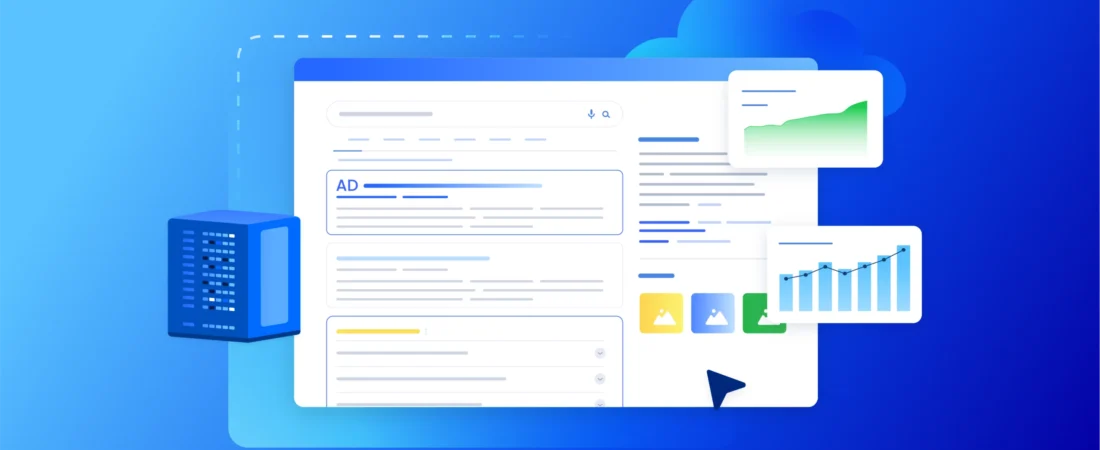
Search engine optimization depends heavily on reliable data. Whether you are checking keyword positions, analyzing competitors, monitoring local search results, or collecting SERP information, the quality of your data can influence every decision that follows. This is where an SEO proxy becomes useful.
An SEO proxy is not a completely different type of internet technology. Rather, it is a regular proxy used specifically for SEO-related activities such as rank tracking, SERP scraping, competitor research, and location-based searches. By routing requests through different IP addresses, proxies can help SEO tools collect information at scale while reducing problems caused by excessive requests from a single connection.
What Is an SEO Proxy?
An SEO proxy works as an intermediary between your SEO software and the website or search engine you want to access.
Instead of sending a request directly from your own IP address, your tool sends it through the proxy. The destination sees the proxy’s IP rather than your original connection. Depending on the service, that IP may belong to a residential network, an ISP, or a data center.
This becomes particularly useful when an SEO professional needs to perform hundreds or thousands of searches. Search engines can limit or challenge automated traffic, so distributing requests across suitable IP addresses can make large-scale data collection more manageable.
It is important to understand one thing: a proxy does not directly improve Google rankings. Its value comes from improving how you collect and analyze SEO data.
How Does a Proxy for SEO Work?
The process is relatively straightforward.
- Your SEO software creates a search or website request.
- The request is sent to the proxy server.
- The proxy forwards it to the target website or search engine.
- The target responds to the proxy’s IP address.
- The response is returned to your SEO tool for analysis.
For example, suppose an agency wants to check 2,000 keywords every morning. Sending every request through the same IP could create rate-limit or CAPTCHA problems. A suitable proxy pool can distribute the workload across multiple connections.
However, IP address alone does not determine the complete search experience. Language, cookies, browser settings, device type, and location signals can also influence search results. Therefore, simply changing an IP does not automatically guarantee perfectly neutral SERPs.
Why Are SEO Proxies Important?
The biggest advantage is scalable data collection.
An SEO professional might need to monitor rankings across several countries, compare local search results, examine competitor pages, and collect SERP features every day. Doing everything manually would be slow and difficult.
A proxy infrastructure can make these workflows more practical.
Rank Tracking
Rank tracking is one of the most common applications. Agencies can check where websites appear for target keywords across different locations and devices.
For local SEO, this matters even more. A business might rank strongly in one city but poorly in another. Location-specific proxy connections can help SEO tools collect results from different markets.
SERP Scraping
Search engine results contain much more than traditional blue links. Modern SERPs can include featured snippets, People Also Ask sections, local packs, shopping results, news, videos, and other features.
Collecting this information at scale can help marketers understand what appears for important queries and which competitors are receiving visibility.
Competitor Research
SEO teams frequently study competitors to understand their rankings, content structures, titles, headings, backlinks, and search visibility.
When research involves many automated requests, proxy infrastructure can help distribute the workload. Still, responsible data collection matters. A proxy should not be viewed as permission to ignore a website’s terms, access restrictions, or applicable laws.
Choosing the Right Proxy Type
Not every proxy is equally suitable for SEO. The best option depends on what you are trying to accomplish.
| Proxy Type | Best Use | Main Advantage | Limitation |
|---|---|---|---|
| Residential | Local SERPs and sensitive search engines | Real-user IP reputation | Usually more expensive |
| Datacenter | High-volume, less-sensitive crawling | Fast and affordable | Easier to identify in some situations |
| ISP | Stable automated SEO workloads | Balance of speed and reputation | Smaller pools in some markets |
| Mobile | Mobile-network testing | Cellular IP environment | Expensive for routine SEO |
Residential proxies are often preferred when accurate geographic targeting and access reliability are important. Datacenter proxies can make sense for less restrictive websites and high-speed crawling. ISP proxies attempt to combine some of the advantages of both categories.
Rotating vs. Sticky Proxies
Another important consideration is whether your proxy changes IP addresses automatically.
Rotating proxies switch IPs after a request or according to a configured interval. They can be useful for large-scale collection where many independent requests need to be distributed.
Sticky sessions, on the other hand, keep the same IP for a period. This can be useful when multiple requests belong to one browsing session and consistency matters.
The right choice depends on the workflow. Constantly changing an IP during a single logical session can actually make data less consistent, while using one IP for an enormous number of independent searches can increase the chance of throttling.
A Practical Example: Local SEO Across Multiple Cities
Imagine an SEO agency managing a plumbing company with branches in London, Manchester, Birmingham, and Leeds.
The agency wants to know whether the company appears for searches such as “emergency plumber,” “plumber near me,” and “24 hour plumber” in each market.
Checking every query manually from the agency’s own office would not provide a reliable picture of what users in each city see. The agency could use location-targeted infrastructure through its rank-tracking system to collect results from the relevant markets.
The resulting data might reveal something interesting: the company could rank near the top in London while being almost invisible in Birmingham. Instead of assuming the entire website has an SEO problem, the agency can investigate local landing pages, citations, Google Business Profile signals, and location-specific competition.
That distinction is one of the most useful benefits of location-aware SEO data.
My Experience With SEO Data Collection
In my experience, the biggest mistake is treating proxy selection as purely a matter of IP quantity; consistency, location accuracy, response speed, and the ability to maintain reliable sessions often matter more than simply having a huge proxy pool.
A thousand unreliable IPs can produce worse SEO data than a much smaller pool that consistently delivers the locations and connections your workflow actually needs.
Do You Always Need an SEO Proxy?
No.
If you use a cloud-based SEO platform that already handles rank tracking and SERP collection, you generally do not need to purchase separate proxies. Many platforms manage the underlying infrastructure themselves.
Separate proxies become more relevant when you are using proxy-compatible desktop software, building your own scraper, conducting custom SERP collection, or managing large automated research workflows.
For some projects, a SERP API or managed rank-tracking service may be more convenient than maintaining proxy infrastructure yourself.
How to Choose a Reliable SEO Proxy
Before purchasing a service, consider these factors:
- Geographic coverage: Can you access the countries and cities you need?
- IP quality: Are the addresses appropriate for your target websites?
- Rotation controls: Can you choose between rotating and sticky sessions?
- Speed: Slow connections can make large research jobs inefficient.
- Reliability: Frequent connection failures can corrupt your data.
- Bandwidth: Make sure the plan can handle your expected workload.
- Software compatibility: Check HTTP, HTTPS, SOCKS5, API, or other requirements.
- Provider restrictions: Confirm what search engines and websites the provider supports.
Testing a provider with a small workload before committing to a large subscription is often the smartest approach. Performance can vary considerably between providers and target websites.
SEO Proxy Best Practices
Using proxies effectively requires more than simply adding a proxy list to an SEO tool.
Keep request rates reasonable, maintain consistent search settings, validate the geographic location of collected results, and avoid assuming that every IP behaves identically.
For rank tracking, consistency is especially important. If you compare today’s results from one location and tomorrow’s results from a completely different location, your report may suggest a ranking change that is actually caused by different search conditions.
Also remember that proxy usage should remain compliant with applicable laws, website policies, and the terms of the services you access.
Also Read: Germany Proxies: Guide to German IPs & Proxy Types
Conclusion
An SEO proxy is essentially proxy infrastructure used for search optimization and data collection. It can support rank tracking, localized SERP monitoring, competitor research, web crawling, and other large-scale SEO activities.
The most important lesson is that proxies are not a ranking shortcut. They provide better infrastructure for collecting information. The real SEO advantage comes afterward—when accurate data helps you identify ranking opportunities, understand competitors, improve local visibility, and make smarter optimization decisions.
For smaller campaigns, a managed SEO platform may be all you need. For large or customized workflows, carefully selected residential, ISP, or datacenter proxies can provide the flexibility and scale required.
FAQs
What is an SEO proxy?
It is a proxy server used for SEO activities such as rank tracking, SERP collection, competitor research, and localized search monitoring.
Does an SEO proxy improve Google rankings?
No. A proxy does not directly increase rankings. It helps SEO professionals collect search and competitor data more efficiently.
Which proxy is best for SEO?
Residential proxies are commonly preferred for location-sensitive search and more demanding search-engine workloads, while datacenter proxies can be useful for speed and lower-cost crawling.
Are rotating proxies useful for rank tracking?
Yes. Rotation can distribute independent requests across multiple IP addresses, although some workflows benefit from sticky sessions when request consistency is important.
Do I need a proxy for SEO?
Not necessarily. Cloud-based SEO and rank-tracking platforms often handle their own infrastructure. Separate proxies are mainly useful for custom scrapers, proxy-compatible software, and large-scale data collection.
Can a proxy show Google results from another country?
It can provide an IP associated with a target region, which can influence geographic search results. However, IP location is only one signal; language, device, cookies, browser settings, and other factors can also affect SERPs.