
Paying for college can feel overwhelming, especially when tuition, textbooks, housing, and everyday expenses start adding up. For many students in the United States, federal student loans help bridge the gap. But before borrowing, it’s important to understand the difference between subsidized and unsubsidized loans.
Both options can help you pay for higher education, yet they work differently when it comes to interest, eligibility, and long-term repayment costs. Choosing the right loan could save you money over time and make life after graduation a little less stressful.
In this guide, you’ll learn how each loan works, who qualifies, how interest affects your balance, and which option may be better for your financial situation.
What Are Subsidized and Unsubsidized Student Loans?
Subsidized and unsubsidized loans are federal student loans offered through the U.S. Department of Education. They are designed to help eligible students cover educational expenses at participating schools.
The biggest difference comes down to who pays the interest during certain periods.
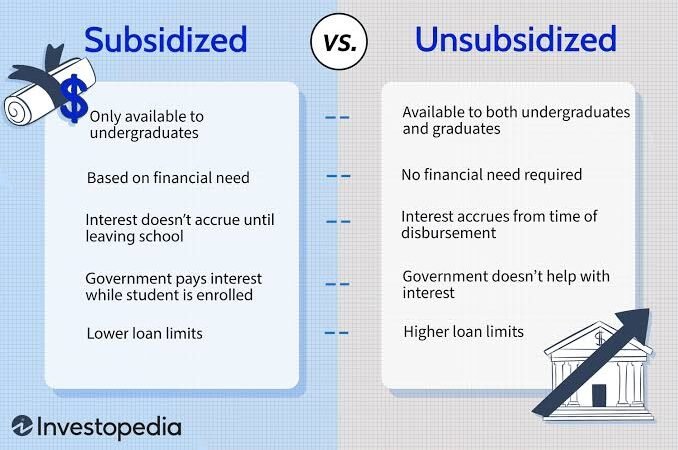
A Direct Subsidized Loan is available to eligible undergraduate students who demonstrate financial need. The federal government generally pays the interest while you’re enrolled at least half-time, during the six-month grace period after leaving school or dropping below half-time enrollment, and during qualifying deferment periods.
A Direct Unsubsidized Loan is available to eligible undergraduate, graduate, and professional students. Financial need is not required. However, interest generally begins accruing as soon as the loan is disbursed, including while you’re studying.
That distinction might seem small at first. Over several years, though, unpaid interest can make a meaningful difference to your total borrowing costs.
Subsidized vs Unsubsidized Loans: Key Differences
Here’s a side-by-side comparison to help you understand the main features of each option.
|
Feature |
Subsidized loan |
Unsubsidized loan |
|---|---|---|
|
Financial need required |
Yes |
No |
|
Available to undergraduate students |
Yes |
Yes |
|
Available to graduate students |
No |
Yes |
|
Interest while enrolled at least half-time |
Generally paid by the government |
Accrues from disbursement |
|
Interest during the grace period |
Generally covered |
Accrues |
|
Interest during qualifying deferment |
Generally covered |
Accrues |
|
Annual borrowing limits |
Generally lower |
Generally higher when combined limits apply |
|
Overall borrowing cost |
Can be lower |
May be higher due to accumulated interest |
Both loan types are federal student loans, so eligible borrowers generally have access to federal repayment options and protections. However, eligibility rules, borrowing limits, and available repayment plans can depend on when you borrowed and your circumstances.
How Interest Works on Each Loan
Interest is the cost of borrowing money. Understanding when it starts accumulating is one of the most useful ways to compare these two student loan options.
Interest on subsidized loans
With a subsidized loan, the government covers interest during certain qualifying periods. This means your outstanding principal generally won’t increase because of interest during those periods.
For example, if you borrow $5,000 and remain enrolled at least half-time, eligible in-school interest is generally covered by the government. Your principal doesn’t grow from that interest while the subsidy applies.
Once the loan enters repayment, interest generally becomes your responsibility.
Interest on unsubsidized loans
Unsubsidized loans work differently. Interest begins accruing when the funds are disbursed, even if you don’t have to make payments while attending school.
You can usually pay the interest as it accumulates. If you don’t, unpaid interest may be capitalized in certain circumstances, meaning it’s added to your principal balance. Future interest can then accrue on the higher amount.
A practical tip: If you can afford to pay even a small amount toward interest while studying, you may reduce the amount that accumulates before repayment begins. Check your loan servicer’s instructions to make sure your payment is applied correctly.
Eligibility and Borrowing Limits
Your eligibility depends on your financial need, enrollment status, and the financial aid rules that apply to you.
To qualify for either type of Direct Loan, you generally need to attend an eligible school at least half-time and meet federal student aid requirements. You must also submit the Free Application for Federal Student Aid (FAFSA).
Subsidized loans are limited to eligible undergraduate students with demonstrated financial need. Unsubsidized loans are available to eligible undergraduate, graduate, and professional students without the same financial-need requirement.
Borrowing limits vary according to your academic year, dependency status, and applicable federal rules. Your school determines the amount you can receive, and you may qualify for less than the maximum limit. Graduate students, for instance, cannot receive new Direct Subsidized Loans under the standard current program.
Because federal student loan rules can change, check the official Federal Student Aid loanguide for the limits and eligibility requirements that apply to your enrollment period.
Real-World Example: Comparing Student Loan Interest Costs
Imagine two undergraduate students, Sarah and Daniel, who each borrow $5,000 at a hypothetical 6% annual interest rate. Both attend college for four years and then receive a six-month grace period.
Sarah qualifies for a subsidized loan. During eligible enrollment and grace periods, the government covers her interest.
Daniel receives an unsubsidized loan. Assuming he makes no payments and interest accrues for the full four and a half years, approximately $1,350 in simple interest could accumulate before repayment, using a simplified estimate that ignores daily accrual variations and any changes in principal.
That doesn’t mean Daniel must immediately pay the entire amount. However, the accumulated interest can increase his overall borrowing cost.
In my view, the most useful way to compare student loans is to look beyond the amount offered and ask how much you’ll owe when repayment begins.
This example is illustrative, not a guaranteed loan calculation. Actual interest depends on disbursement dates, applicable rates, payments, and capitalization rules.
Which Loan Should You Choose?
If you qualify for both options, a subsidized loan is generally the better starting point because eligible in-school and grace-period interest is covered.
Here’s a practical approach to making your decision:
-
Accept grants and scholarships first. These can reduce the amount you need to borrow and generally don’t require repayment.
-
Use eligible subsidized loans next. They can help minimize interest costs while you’re studying.
-
Consider unsubsidized loans for remaining expenses. Borrow only what you need after reviewing your other financial aid.
-
Pay interest early when possible. Even small payments toward unsubsidized loan interest may help reduce your eventual repayment burden.
-
Review your full financial aid offer. Compare the amount you need with the amount offered instead of automatically accepting the maximum.
Remember, neither loan is free money. Both must be repaid, and the right borrowing decision depends on your education costs, available resources, and expected financial circumstances after graduation.
How to Apply for Federal Student Loans
The process starts with the FAFSA, which helps your school determine your eligibility for federal financial aid.
After submitting the application, review your financial aid offer carefully. It may include grants, scholarships, work-study opportunities, and federal student loans. Your school will identify the loan types available to you and the amounts you may borrow.
Before accepting a loan, review its interest rate, fees, repayment requirements, and total borrowing amount. You can generally accept less than the amount offered.
Keep copies of your loan documents and check your loan servicer’s information regularly. Understanding your obligations now can help you avoid unpleasant surprises when repayment begins.
For current eligibility details and application guidance, visit Federal Student Aid .
Also Read: FAFSA Deadline: Key Dates and How to Apply on Time 2027
Conclusion
Understanding subsidized vs unsubsidized loans can help you make smarter decisions about paying for college. The main difference is interest: subsidized loans offer government-paid interest during qualifying periods, while unsubsidized loans generally begin accumulating interest as soon as the money is disbursed.
If you qualify for both, consider using your subsidized loan eligibility first, then borrowing only the additional amount you genuinely need through an unsubsidized loan. Compare your financial aid offer carefully, understand your repayment obligations, and plan ahead.
A little preparation today can make managing student debt much easier tomorrow.
FAQs
1. Is a subsidized loan better than an unsubsidized loan?
Generally, yes. A subsidized loan can cost less because the government covers eligible interest during school, the grace period, and qualifying deferment periods. However, you must meet financial-need requirements to qualify.
2. Do unsubsidized loans accumulate interest while you’re in school?
Yes. Interest generally begins accruing when the loan is disbursed. You can pay it while studying or allow it to accumulate, potentially increasing your overall repayment cost.
3. Can graduate students receive subsidized student loans?
No. Under the standard federal Direct Loan program, subsidized loans are available only to eligible undergraduate students. Graduate and professional students may qualify for unsubsidized loans.
4. Do both loan types have to be repaid?
Yes. Both are borrowed money that must be repaid with applicable interest. Subsidized loans do not eliminate your repayment obligation; they simply provide an interest benefit during qualifying periods.
5. Should I accept the full student loan amount offered?
Not necessarily. Borrow only what you need after accounting for grants, scholarships, savings, and other available resources. Accepting less can reduce your future debt and interest expenses.