
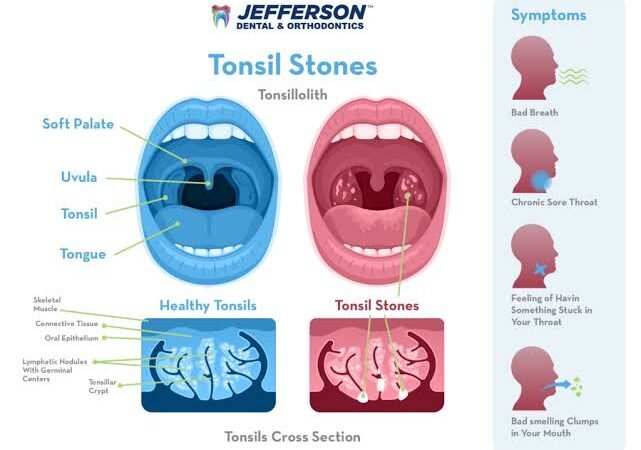
Tonsil stones are small, often unpleasant-smelling formations that develop in the tiny pockets of the tonsils. They may look harmless, but they can cause persistent bad breath, throat irritation, difficulty swallowing, and an uncomfortable feeling that something is stuck in the back of the throat. Some people notice them accidentally while looking in a mirror, while others experience symptoms for weeks without understanding the cause.
Although these formations are generally not dangerous, knowing why they develop and how to manage them can make a noticeable difference in oral and throat health. The good news is that many cases can be managed with simple home-care habits, without requiring medical treatment.
What Are Tonsil Stones?
Tonsil stones, medically known as tonsilloliths, are small deposits that collect inside the natural crevices of the tonsils. They usually appear as white or yellowish lumps and may have a firm, crumbly texture.
The tonsils are two small areas of tissue located at the back of the throat. Their surface contains tiny openings called crypts. Food particles, dead cells, mucus, and bacteria can become trapped in these pockets. Over time, the material may harden as minerals such as calcium accumulate.
Some formations are barely visible, while others become large enough to cause noticeable discomfort. They can develop in people of different ages, although individuals with deeper tonsil crypts may be more likely to experience them.
Common Causes of Tonsil Stones
These deposits do not usually develop because of a single factor. Instead, several conditions can contribute to their formation.
-
Food particles: Small food fragments may become trapped inside tonsil pockets.
-
Bacteria: Naturally occurring oral bacteria break down trapped material and contribute to unpleasant odors.
-
Dead cells: Shed cells from the mouth and throat can collect in tonsil crypts.
-
Mucus accumulation: Postnasal drip can introduce additional mucus into the throat.
-
Poor oral hygiene: Inadequate brushing, flossing, and tongue cleaning may increase bacterial buildup.
-
Deep tonsil crypts: Naturally larger or deeper openings can make debris easier to trap.
People who frequently experience throat inflammation or recurring tonsil infections may also develop these deposits.
Symptoms to Watch For
Not everyone experiences noticeable symptoms. Small formations can remain hidden inside the tonsils and disappear without causing problems.
When symptoms occur, they may include:
-
Persistent bad breath: One of the most common signs, often caused by sulfur-producing bacteria.
-
White or yellow spots: Small lumps may appear on the surface or inside the tonsils.
-
Throat discomfort: Some people feel mild irritation or a scratching sensation.
-
Difficulty swallowing: Larger deposits can make swallowing uncomfortable.
-
Ear pain: Nerves around the throat and ears share pathways, so irritation may sometimes feel like ear discomfort.
-
A foreign-body sensation: It may feel as though something is stuck in the throat.
-
Coughing: Occasional coughing can occur as the throat reacts to irritation.
A useful distinction is that persistent bad breath accompanied by visible white deposits may suggest tonsil stones, but white patches can also occur with infections. Appearance alone cannot confirm the diagnosis.
How to Remove Tonsil Stones Safely
Many small formations fall out naturally during coughing, swallowing, or normal throat movement. Others may require gentle care.
1. Gargle With Warm Salt Water
Mix approximately half a teaspoon of salt into a glass of warm water. Gargle gently and spit it out. This can help loosen debris, soothe irritation, and improve throat cleanliness.
2. Maintain Good Oral Hygiene
Brush twice daily, floss regularly, and gently clean your tongue. Removing bacteria and food debris from the mouth can help reduce the material that collects around the tonsils.
3. Stay Hydrated
Drinking enough water supports saliva production and helps keep the mouth and throat moist. This can reduce dryness and help clear loose debris.
4. Try Gentle Coughing
A natural cough may dislodge a small, loose deposit. Avoid repeatedly forcing a cough, as excessive irritation can make the throat uncomfortable.
5. Seek Professional Removal When Necessary
If a deposit is large, painful, deeply lodged, or difficult to remove, a healthcare professional can examine the tonsils and remove it safely when appropriate.
Important: Avoid using sharp objects, fingernails, toothpicks, or aggressive water jets to remove these formations. The tonsils contain delicate tissue and blood vessels, so forceful removal can cause bleeding, injury, or infection.
Tonsil Stones vs. Tonsillitis: Understanding the Difference
Tonsil stones and tonsillitis can cause similar throat discomfort, but they are different conditions. Tonsil stones involve trapped debris that hardens inside tonsil pockets, whereas tonsillitis refers to inflammation of the tonsils, often caused by a viral or bacterial infection.
Understanding the differences can help you decide whether simple home care is sufficient or medical attention is needed.
| Feature | Tonsil Stones | Tonsillitis |
|---|---|---|
| Main cause | Trapped debris and bacteria | Viral or bacterial infection |
| Appearance | Small white or yellow lumps | Swollen, red tonsils with possible white patches |
| Bad breath | Common | Sometimes occurs |
| Fever | Uncommon | More common |
| Throat pain | Usually mild | Can be significant |
| Treatment | Oral hygiene and gentle care | Depends on the underlying infection |
A person with fever, severe throat pain, swollen lymph nodes, or difficulty swallowing should not automatically assume that white spots are harmless deposits. A medical examination can help identify the actual cause.
How to Prevent Tonsil Stones From Returning
Removing an existing deposit is only part of the solution. Developing consistent oral hygiene habits may help reduce future buildup.
Here are practical ways to lower the likelihood of recurrence:
-
Brush your teeth regularly: Clean your teeth twice a day using fluoride toothpaste.
-
Floss every day: Remove food particles between teeth before bacteria accumulate.
-
Clean your tongue: Bacteria can collect on the tongue and contribute to unpleasant breath.
-
Use saltwater gargles: Gentle gargling may help clear loose debris from the throat.
-
Drink enough water: Proper hydration supports saliva production and helps prevent dry mouth.
-
Manage postnasal drip: Allergies and nasal congestion can increase mucus entering the throat. Discuss persistent symptoms with a healthcare professional.
-
Avoid tobacco products: Smoking can contribute to dry mouth and poor oral health.
These habits cannot guarantee that stones will never return, particularly if you naturally have deep tonsil crypts. However, maintaining a clean and hydrated mouth can make recurring problems easier to manage.
When Should You See a Doctor?
Occasional small deposits usually do not require urgent treatment. However, recurring or uncomfortable symptoms deserve professional attention.
Consider arranging a medical appointment if you experience:
-
Repeated tonsil stones that interfere with daily activities.
-
Persistent bad breath despite good oral hygiene.
-
Ongoing throat irritation or discomfort.
-
Large deposits that are difficult to remove.
-
Frequent tonsil inflammation or infections.
-
Painful swallowing that does not improve.
Seek urgent medical attention if you experience difficulty breathing, cannot swallow saliva, develop significant throat swelling, or have severe one-sided throat pain with difficulty opening your mouth.
An ear, nose, and throat (ENT) specialist can examine the tonsils and recommend appropriate treatment.
Can Tonsil Stones Be Removed Permanently?
There is no guaranteed permanent home remedy for recurring tonsil stones. Their return depends partly on the structure of your tonsils and how easily debris collects in their pockets.
For people with frequent problems, doctors may discuss different treatment approaches:
Professional removal: A healthcare professional may remove troublesome deposits during an examination.
Treatment of underlying conditions: Managing chronic nasal congestion, postnasal drip, or oral health problems may reduce contributing factors.
Tonsillectomy: In selected cases involving persistent, troublesome symptoms, surgical removal of the tonsils may be discussed. However, surgery is not routinely recommended for occasional stones because it involves recovery time and potential complications, including bleeding.
The best approach depends on symptom severity, recurrence, medical history, and individual circumstances.
A Practical Example of Managing Recurring Tonsil Stones
Imagine someone who brushes regularly but continues experiencing unpleasant breath. After noticing a tiny white lump near one tonsil, they assume it is a leftover food particle. Over the next few weeks, similar deposits appear, particularly after meals.
Instead of repeatedly poking the tonsils with household objects, they begin cleaning their tongue, flossing daily, drinking more water, and gently gargling with salt water. When the problem continues, they visit an ENT specialist to confirm the diagnosis and discuss safe treatment options.
This illustrates an important point: recurring symptoms should be approached by addressing both the visible deposits and the conditions that allow them to develop.
Personally, I would prioritize identifying the reason behind recurring deposits rather than focusing only on removing each visible stone.
Also Read: Normal Resting Heart Rate: What’s Healthy and What’s Not?
Conclusion
Tonsil stones are common formations that develop when food particles, bacteria, mucus, and dead cells collect inside the small pockets of the tonsils. Although they are generally harmless, they can contribute to bad breath, throat irritation, and discomfort when swallowing.
Good oral hygiene, proper hydration, and gentle saltwater gargles can help manage minor cases. However, repeatedly occurring deposits, persistent discomfort, or signs of infection should be evaluated by a healthcare professional.
Understanding the difference between harmless deposits and more serious throat conditions is essential. With appropriate care and medical guidance when necessary, most people can manage this condition without major complications.
FAQs
1. Are tonsil stones dangerous?
Most are harmless and do not cause serious health problems. However, large or recurring deposits can cause discomfort, irritation, and persistent bad breath. Medical evaluation is recommended when symptoms become troublesome.
2. What do tonsil stones look like?
They generally appear as small white or yellowish lumps located inside the tonsil pockets or on their surface. Their texture may be soft, crumbly, or relatively firm.
3. Can tonsil stones cause bad breath?
Yes. Bacteria trapped inside the tonsil crypts can produce sulfur-containing compounds that create an unpleasant smell. This is why some people experience persistent bad breath even after brushing their teeth.
4. Do tonsil stones go away on their own?
Yes. Small deposits may naturally dislodge through swallowing, coughing, or normal throat movement. Others may remain trapped and require professional evaluation.
5. Can I remove tonsil stones with a cotton swab?
Although some people attempt this, pressing or scraping the tonsils can cause bleeding and tissue injury. Professional guidance is safer, particularly for deep or painful deposits.
6. Does mouthwash prevent tonsil stones?
Mouthwash can help reduce bacteria and improve breath, but it cannot guarantee prevention. Regular brushing, flossing, tongue cleaning, and hydration remain important.
7. Can children develop tonsil stones?
Yes. Children and teenagers can develop them, although they may not always recognize or explain the symptoms. Persistent bad breath, throat discomfort, or visible white deposits should be evaluated by a healthcare professional.