
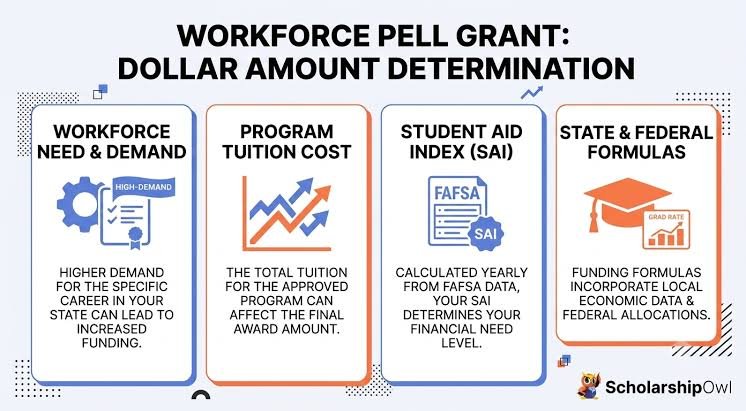
Paying for college can feel overwhelming, especially when tuition, textbooks, transportation, and everyday expenses keep adding up. For students who need financial assistance, federal student aid can make higher education more affordable. One of the most valuable options is the Pell Grant, a federal program designed to help eligible students cover the cost of their education without taking on the burden of a traditional student loan.
Understanding how this financial aid works can help you make informed decisions before enrolling in college. From eligibility requirements to award amounts and application steps, here’s what students and families should know about getting this assistance in the 2026–27 academic year.
What Is a Pell Grant?
A Pell Grant is a form of federal financial aid awarded primarily to undergraduate students who demonstrate financial need. Unlike most student loans, this funding generally does not need to be repaid, provided the recipient follows the program’s requirements.
The U.S. Department of Education administers the program, and eligible students can use the funding at participating colleges, universities, community colleges, and certain career schools.
The primary purpose is straightforward: to reduce financial barriers that might otherwise prevent students from pursuing higher education.
For example, imagine a student from a low-income household who has been accepted into a community college. Tuition is manageable, but textbooks and transportation create additional financial pressure. Receiving federal grant assistance could reduce the amount the student needs to pay out of pocket or borrow.
This support can be especially valuable for first-generation college students and families trying to balance education expenses with household bills.
How Much Money Can You Receive in 2026–27?
The amount awarded depends on several factors, including financial circumstances, enrollment intensity, the cost of attendance, and remaining lifetime eligibility.
For the 2026–27 award year, which runs from July 1, 2026, through June 30, 2027, the maximum scheduled annual award is $7,395, while the minimum award is $740 for eligible recipients. Not every student qualifies for the maximum amount.
|
Award detail |
2026–27 information |
|---|---|
|
Maximum scheduled annual award |
$7,395 |
|
Minimum award |
$740 |
|
Repayment |
Generally not required |
|
Application |
Free Application for Federal Student Aid (FAFSA) |
|
Award determination |
Financial eligibility, enrollment, and other applicable limits |
|
Lifetime limit |
Generally 12 full-time-equivalent semesters |
These figures describe the published award limits, not a guaranteed payment for every applicant.
A student attending school part-time may receive less than someone enrolled full-time. The final amount can also depend on the student’s eligibility calculation and the school’s cost of attendance.
Some eligible students may receive additional funding through year-round Pell, potentially allowing them to receive up to 150% of their scheduled annual award within an award year. Additional eligibility requirements apply.
Who Qualifies for Federal Grant Assistance?
Eligibility is based on more than household income alone. The federal government considers information submitted through the FAFSA, the student’s educational circumstances, and applicable program rules.
Generally, applicants must meet the following requirements:
-
Demonstrate financial eligibility: The federal calculation considers household circumstances and other financial information. There is no single income cutoff that applies to every student.
-
Meet citizenship or eligible noncitizen requirements: Applicants must satisfy the applicable federal student aid eligibility rules.
-
Enroll in an eligible program: Most recipients must be undergraduate students who have not earned a bachelor’s or professional degree.
-
Attend an eligible institution: The school and educational program must participate in the relevant federal aid program.
-
Maintain satisfactory academic progress: Students must meet their school’s applicable academic progress standards.
-
Meet other federal requirements: Enrollment status, prior aid history, and remaining lifetime eligibility may affect an award.
There are limited exceptions to the usual undergraduate degree requirement, including certain eligible postbaccalaureate teacher certification programs and qualifying workforce programs. Workforce program eligibility rules introduced for the 2026–27 award year have specific conditions.
Importantly, having a low income does not automatically guarantee approval. The most reliable way to determine eligibility is to submit the FAFSA and review the results with the financial aid office.
How to Apply for a Pell Grant
Applying is relatively straightforward, but providing accurate information and responding to requests from your college can prevent unnecessary delays.
1. Complete the FAFSA
Start by completing the Free Application for Federal Student Aid through the official Federal Student Aid website . The application is free.
You’ll provide information about your financial circumstances, family situation when applicable, and educational plans. Depending on your circumstances, a parent or spouse may need to contribute information.
2. Review Your FAFSA Submission Summary
After processing, review your FAFSA Submission Summary for your eligibility information and Student Aid Index (SAI). The SAI is a number colleges use when determining financial aid eligibility; it is not the amount you must pay for college.
The summary may include an estimate of your federal aid eligibility, but the estimate is not the final award decision.
3. Follow Up With Your College
Make sure your selected school receives your FAFSA information. Its financial aid office may request additional documents or clarification before finalizing your award.
Respond promptly to these requests and check your student portal regularly.
4. Review Your Financial Aid Offer
Your college will explain the aid available to you. Review the grant amount, enrollment assumptions, tuition charges, and other expenses before deciding how to cover the remaining balance.
You can begin at StudentAid.gov to access the official application and federal aid information.
Pell Grant vs. Student Loans: What’s the Difference?
Understanding the difference between grants and loans is essential when comparing financial aid offers. Both can help pay for education, but their long-term financial effects are different.
|
Feature |
Pell Grant |
Student loan |
|---|---|---|
|
Repayment |
Generally not required |
Usually required |
|
Interest |
No loan interest |
Depends on loan type |
|
Eligibility |
Primarily based on undergraduate eligibility and financial need |
Depends on the loan program |
|
Effect after graduation |
No regular loan payments for grant funds that do not require repayment |
Repayment may continue for years |
|
Main benefit |
Reduces education costs without typical loan debt |
Provides funds that must generally be repaid |
For a student who qualifies for both, grants can be an important first step toward reducing borrowing. However, a grant may not cover every expense, so comparing the complete financial aid package remains important.
How Is the Money Paid to Students?
In most cases, the college applies grant funds to eligible education charges, such as tuition and required fees. Depending on the school’s procedures and the student’s account balance, the money may also cover eligible room and board charges.
If the aid exceeds the eligible charges billed by the school, the remaining credit balance is generally handled according to federal rules and the institution’s refund procedures. Students may then use an authorized refund for other education-related expenses.
Consider a student whose approved aid exceeds the tuition and fees charged for the semester. The school may apply the funds to the account first and issue the remaining eligible credit balance to the student. The timing and method depend on the institution’s procedures.
Before relying on a refund to pay rent or purchase books, confirm when the school expects to disburse the funds. An award shown on a financial aid portal does not necessarily mean the money is already available.
Common Mistakes to Avoid
Even eligible students can run into problems when they overlook important details.
-
Skipping the FAFSA: You generally need to submit the application to be considered for federal student aid.
-
Assuming the maximum award is guaranteed: Your actual award depends on your individual eligibility and enrollment.
-
Ignoring school communications: Missing a verification request or other deadline may delay your aid.
-
Forgetting to renew your application: You generally need to complete the FAFSA for each award year.
-
Overlooking academic progress requirements: Changes in academic performance or enrollment can affect continued eligibility.
-
Misunderstanding repayment rules: Grants generally do not require repayment, but withdrawing, receiving an overpayment, or becoming ineligible can create a repayment obligation.
A useful habit is to keep a copy of your FAFSA confirmation, award letter, and messages from your financial aid office. Having these records in one place makes it easier to resolve questions before they become bigger problems.
Also Read: FAFSA Guide: Aid, Eligibility, Deadlines & Tips for 2026
Conclusion
A Pell Grant can make college more accessible by helping eligible students pay for education without relying entirely on loans or personal savings. Although the maximum award for 2026–27 is $7,395, the amount you receive depends on your individual circumstances, enrollment, and applicable federal rules.
The best starting point is to complete the FAFSA, review your eligibility information, and communicate with your college’s financial aid office. Compare your full aid offer rather than focusing on one number, and make sure you understand when funds will be available.
Taking these steps early can help you build a more realistic college budget, avoid unnecessary borrowing, and focus more confidently on your education.
FAQs
1. Do you have to pay back a Pell Grant?
Generally, no. However, you may have to repay some or all of the funds if you withdraw under circumstances that require a return of aid, receive an overpayment, or otherwise become ineligible for funds already paid.
2. What is the maximum Pell Grant for 2026–27?
The maximum scheduled annual award is $7,395 for the 2026–27 award year. Your actual award may be lower depending on your eligibility, enrollment intensity, and other applicable limits.
3. Can I qualify if my parents earn too much money?
Possibly. Eligibility is not determined by one universal income cutoff. Household size, family circumstances, tax information, and other federal criteria can affect the result. Complete the FAFSA to receive an individualized assessment.
4. Can I receive a Pell Grant if I attend college part-time?
Yes, eligible part-time students may receive an award. However, the amount is generally adjusted according to enrollment intensity and other applicable requirements.
5. Can I use the grant for online college courses?
Potentially, yes. Online students may qualify if they meet federal eligibility requirements and attend an eligible institution and program. Confirm your school’s eligibility and aid procedures before enrolling.
6. How long can I receive Pell Grant funding?
Lifetime eligibility is generally limited to the equivalent of 12 full-time semesters, or approximately six years of full-time study. Your remaining eligibility depends on your previous use of the grant.
7. How do I check my Pell Grant status?
Sign in to your account on StudentAid.gov to review your FAFSA information. For your finalized award amount, disbursement dates, or outstanding requirements, contact your college’s financial aid office.